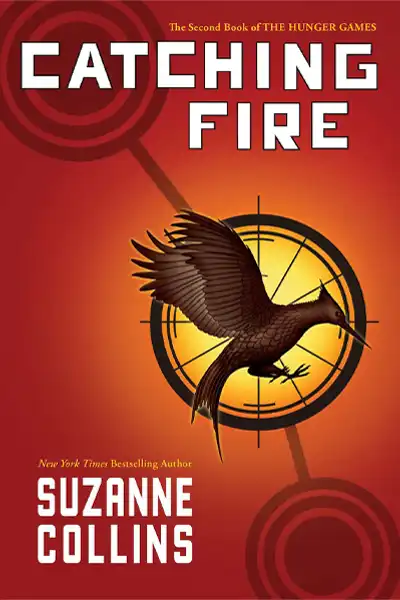
| Full Title | Catching Fire |
| Author Name | Suzanne Collins |
| Ghostwriter | No officially credited ghostwriter |
| Genre | Teen & Young Adult Fiction, Dystopian Fiction, Science Fiction, Adventure |
| First Publisher | Scholastic Press (2009 original edition) |
| First Publication Date | September 1, 2009 |
| Formats Available | Hardcover, Paperback, eBook, Audiobook, Kindle Edition |
| Number of Pages | 391 pages (hardcover edition; page count may vary by format) |
| Series | Yes — Book 2 of The Hunger Games trilogy |
| Edition | Multiple editions worldwide, including collector’s editions, anniversary editions, school editions, and translated international releases |
| Original Language | English |
| Languages Available | Many languages including Spanish, French, German, Japanese, Chinese, Hindi, Italian, Portuguese, and more |
| Recommended Age Group | Ages 12+ / Teen & Young Adult, though widely read by adults |
| Book Dimensions | About 5.5 x 1.5 x 8.3 inches (varies by edition)(Hardcover) |
| Approx. Copies Sold | As part of the massively successful Hunger Games series, Catching Fire has sold 10 million copies worldwide |
| ISBN-10 | 0439023491 |
| ISBN-13 | 978-0439023498 |
| Country of Origin | United States |
Read Inside This Book
Inside this book.
About Catching Fire – Summary with Conclusion
Catching Fire takes the survival story of the first book and pushes it into something larger, sharper, and far more dangerous. Katniss Everdeen has technically won the Games, but victory brings no peace. Instead of freedom, she becomes a symbol—one the Capitol fears and ordinary people begin to notice. This shift changes the story from personal survival into political tension.
As Katniss and Peeta travel through Panem, cracks in the system become impossible to ignore. Fear still controls society, but rebellion quietly grows beneath the surface. The Quarter Quell raises the stakes by forcing Katniss back into an arena designed not just to punish her, but to break hope itself. This return feels more emotionally layered because survival now carries consequences beyond individual life or death.
What makes Catching Fire powerful is its expanding scope. Suzanne Collins keeps the suspense intense while exploring propaganda, resistance, and the cost of becoming a public symbol. Katniss remains relatable because she does not seek power; she struggles simply to protect those she loves while trapped inside larger forces.
Conclusion
Catching Fire succeeds because it transforms a gripping dystopian adventure into a deeper story about rebellion, identity, and courage. It builds tension brilliantly while proving that surviving once does not mean the real battle is over.
Contents of this Book.
Table of Contents — Catching Fire
Part I: The Spark
Chapter 1 – Chapter 9
Part II: The Quell
Chapter 10 – Chapter 18
Part III: The Enemy
Chapter 19 – Chapter 27
Chapter-wise Summary.
Chapter-wise Summary: Catching Fire
Part I: The Spark
Chapter 1
Katniss returns home changed but unsettled. Life in District 12 looks safer, yet fear lingers because President Snow privately warns her that her past defiance has inspired dangerous rebellion.
Chapter 2
Snow’s threat forces Katniss to perform obedience. She realizes survival now depends not only on protecting herself, but also convincing the nation her actions were driven by love, not resistance.
Chapter 3
Gale’s growing anger toward the Capitol creates emotional strain. Katniss feels torn between personal loyalty, political danger, and the impossible pressure of public performance.
Chapter 4
Preparations for the Victory Tour begin. Katniss understands every appearance matters, since one wrong expression could cost innocent lives.
Chapter 5
Traveling through districts exposes unrest beneath forced celebrations. Katniss witnesses silent rebellion and begins understanding her symbolic influence.
Chapter 6
In District 11, Rue and Thresh’s families deepen Katniss’s grief. Public resistance erupts, proving rebellion is no longer hidden.
Chapter 7
Snow tightens control. Katniss’s fear grows as punishment becomes more visible.
Chapter 8
Peeta publicly proposes marriage, creating political distraction while complicating emotional truths.
Chapter 9
The Quarter Quell announcement changes everything: previous victors must return to the arena, turning survival into a nightmare reborn.
Part II: The Quell
Chapter 10
Katniss faces devastating reality. Training begins again, but this time opponents are experienced survivors.
Chapter 11
Old victors reveal intelligence, trauma, and unpredictability, making alliances more complex.
Chapter 12
Haymitch’s strategy focuses on public sympathy rather than simple combat.
Chapter 13
Katniss meets allies she does not fully trust, including Finnick.
Chapter 14
Private training highlights rebellion through symbolic defiance.
Chapter 15
Caesar interviews deepen emotional stakes while exposing manipulation.
Chapter 16
The arena begins with deadly precision. Danger feels immediate.
Chapter 17
Katniss discovers the arena itself is designed like a weaponized clock.
Chapter 18
Alliances become necessary as survival depends on cooperation.
Part III: The Enemy
Chapter 19
Katniss grows closer to unexpected allies while uncovering hidden motives.
Chapter 20
The arena’s structure becomes clearer, shifting survival into strategy.
Chapter 21
Each section of the clock brings unique horrors, testing endurance.
Chapter 22
Trust becomes fragile but essential.
Chapter 23
Rebellion signals begin appearing beneath the Games’ surface.
Chapter 24
Katniss realizes the arena may represent something larger than punishment.
Chapter 25
A rescue plan emerges through chaos.
Chapter 26
Katniss destroys the force field, breaking both arena control and symbolic oppression.
Chapter 27
She awakens to shocking truth: District 12 is destroyed, and the real war has begun.
Key Themes & Takeaways.
Key Themes & Takeaways of Catching Fire
Power fears symbolism
Katniss becomes dangerous not because she seeks control, but because people attach hope to her actions. The story shows how symbols can threaten oppressive systems.
Survival can evolve into resistance
Winning once does not end struggle. Katniss learns that staying alive sometimes means challenging injustice, not simply avoiding danger.
Control often hides behind spectacle
The Capitol uses entertainment to distract and dominate, reminding readers how public performance can mask deeper political manipulation.
Fear can enforce obedience, but not forever
Snow rules through intimidation, yet growing unrest proves fear weakens when people begin imagining change.
Trust becomes complex in broken systems
Alliances matter, but survival often requires questioning motives carefully.
Personal choices can carry public consequences
Katniss’s private decisions ripple across Panem, showing how individual actions can influence larger movements.
Best Short Quotes from this Book.
Best Short Quotes from Catching Fire
“Remember who the real enemy is.”
“Fire is catching! And if we burn, you burn with us!”
“Katniss, there is no District Twelve.”
“You could live a hundred lifetimes and never deserve him.”
“I am not pretty. I am not beautiful. I am as radiant as the sun.”
“Because I can count on my fingers the number of sunsets I have left.”
“It must be a fragile system if it can be brought down by just a few berries.”
“My nightmares are usually about losing you.”
“One more time? For the audience?”
Who Should Read this Book?
Who Should Read Catching Fire?
Teen and young adult readers who enjoy high-stakes fiction
If you like fast pacing, emotional pressure, and stories where survival connects with larger social conflict, this book offers far more than simple adventure.
Readers interested in dystopian worlds with political depth
This story (Catching Fire) goes beyond arena danger. It explores power, propaganda, rebellion, and how governments maintain control.
Fans of strong but imperfect protagonists
Katniss feels human because she is brave without being fearless. Readers who appreciate emotionally layered characters often connect with her.
People who enjoy sequels that expand the original story
Rather than repeating the first book, this sequel broadens the world, raises consequences, and deepens emotional complexity.
Readers curious about media influence and public image
The Capitol’s manipulation feels fictional, yet its use of spectacle may feel surprisingly relevant.
Book clubs or discussion-focused readers
Its themes of oppression, resistance, sacrifice, and identity create meaningful conversation.
Emotional Impact of this Book.
Emotional Impact of Catching Fire
How the Book Makes You Feel
Catching Fire creates tension that feels heavier than simple suspense. It blends fear, anger, heartbreak, and determination in a way that keeps emotions shifting constantly. Katniss’s world feels increasingly unstable, so readers often experience pressure alongside her. The story (Catching Fire) does not simply entertain—it creates unease about power, control, and sacrifice.
Memorable Moments
President Snow’s warning immediately changes the emotional tone, replacing post-victory relief with dread. The Quarter Quell announcement stands out because it crushes hope so suddenly. Finnick’s complexity, Peeta’s loyalty, and Katniss’s growing symbolic role all deepen the emotional weight. The final revelation about District 12 often leaves readers shocked, not just because of destruction, but because survival has transformed into something larger and darker.
Relatable Experiences
While few readers face dystopian arenas, many understand pressure, public expectations, or feeling trapped by forces beyond personal control. Katniss’s struggle between protecting loved ones and carrying unwanted responsibility feels deeply human.
Strengths of this book.
Strengths of Catching Fire
Raises the stakes intelligently
Instead of repeating the first book’s formula, this sequel expands the conflict from personal survival to national unrest, making the story feel larger and more meaningful.
Stronger political depth
The book explores propaganda, authoritarian control, and rebellion with sharper focus, giving readers more than action alone.
Emotionally layered protagonist
Katniss remains compelling because her fear, confusion, and protective instincts feel authentic. She does not become unrealistically heroic.
Excellent pacing
The story balances quieter psychological tension with intense arena action, keeping momentum strong without feeling rushed.
Memorable supporting characters
Figures like Finnick, Johanna, and Beetee add complexity, unpredictability, and emotional range.
Powerful symbolism
The mockingjay becomes more than an image; it represents resistance, unintended influence, and collective hope.
Surprising structural evolution
The Quarter Quell feels familiar yet different, allowing readers to re-enter the Games while uncovering deeper systems.
Strong ending impact
Its conclusion shifts the series dramatically, creating urgency for what follows.
Weaknesses or Limitations of this Book.
Weaknesses or Limitations of Catching Fire
Familiar structural repetition
Although the story expands politically, returning to another arena may feel slightly repetitive for readers hoping for a completely new narrative direction.
Love triangle can feel overemphasized
For some readers, the emotional tension between Katniss, Peeta, and Gale occasionally interrupts the larger political urgency.
Secondary character depth varies
While several new characters are memorable, some victors receive limited exploration despite intriguing potential.
Fast pacing can reduce reflection
The constant pressure keeps the story gripping, but certain emotional consequences or political developments may feel briefly examined.
Katniss’s internal confusion may frustrate some readers
Her uncertainty feels realistic, yet readers wanting decisive leadership may sometimes find her hesitation exhausting.
Complex themes may overshadow younger readers
Its political manipulation and moral ambiguity add richness, but some younger audiences may connect more with action than deeper commentary.
Ending may feel abrupt
The final twist is powerful, though its suddenness can leave readers emotionally unsettled without immediate closure.
FAQ Section.
FAQ: Catching Fire
1. Do I need to read The Hunger Games first?
Yes, reading the first book helps a lot. Catching Fire builds directly on earlier events, relationships, and political consequences, so starting with book one creates a stronger emotional experience.
2. Is Catching Fire better than the first book?
Many readers believe it deepens the story by adding larger political stakes, stronger character development, and more layered emotional pressure while keeping the suspense intense.
3. Is this book only about surviving another arena?
No. While the Games return, the novel expands into rebellion, propaganda, and power, making it much broader than a repeat survival story.
4. What makes Katniss compelling in this sequel?
She feels more emotionally burdened. Katniss is no longer fighting only for herself—her choices begin affecting entire districts.
5. Is the book appropriate for teen readers?
Yes, especially for teens who enjoy dystopian fiction, though its violence and political themes may feel intense for younger readers.
6. Does the sequel introduce strong new characters?
Absolutely. Characters like Finnick and Johanna add unpredictability, intelligence, and emotional depth.
7. Is there romance, or is it mainly action?
Both. The emotional tension remains important, but political conflict and survival dominate the larger narrative.
8. Does the ending make readers want the next book?
Very much. The conclusion shifts everything dramatically and creates immediate urgency.
About the author


All Genres
Biographies, Diaries & Memoirs Business & Investing Children Fiction Children’s Books Crime, Thriller & Mystery Fiction Health, Fitness & Nutrition Non-Fiction Picture Book Romance Science Fiction & Fantasy Self-Help & Personal Development Series Teen and Young Adult
Show more +Show less –Final Verdict :
Catching Fire is a gripping, emotionally charged sequel that expands survival into rebellion, blending political tension, unforgettable stakes, and deeper character growth into one of young adult fiction’s strongest follow-up novels.
-
Book Rating:9.4