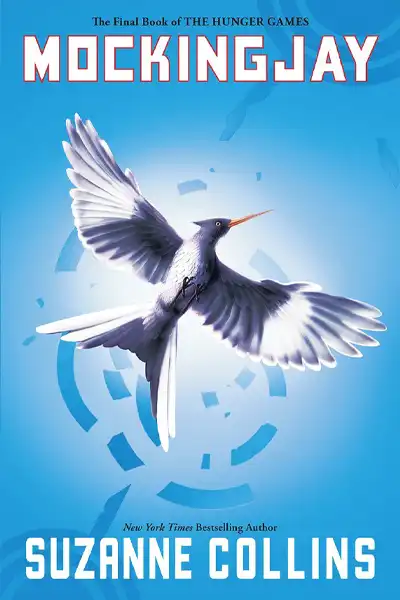
| Full Title | Mockingjay |
| Author Name | Suzanne Collins |
| Ghostwriter | No officially credited ghostwriter |
| Genre | Teen & Young Adult Fiction, Dystopian Fiction, Science Fiction, Political Fiction, Adventure |
| First Publisher | Scholastic Press |
| First Publication Date | August 24, 2010 |
| Formats Available | Hardcover, Paperback, eBook, Kindle Edition, Audiobook, Library Edition |
| Number of Pages | 390 pages (hardcover edition; may vary by format) |
| Series | Yes — Book 3 and final installment of The Hunger Games original trilogy |
| Edition | Multiple worldwide editions, including hardcover, paperback, deluxe editions, collector’s editions, educational editions, and international translated versions |
| Original Language | English |
| Languages Available | Available In: Numerous languages including Spanish, French, German, Italian, Portuguese, Chinese, Japanese, Korean, Hindi, and many more |
| Recommended Age Group | Ages 12+ / Teen & Young Adult, also widely read by adults |
| Book Dimensions | About 5.5 x 1.5 x 8.3 inches (varies by edition) (Hardcover) |
| Approx. Copies Sold | As part of The Hunger Games global phenomenon, Mockingjay has sold 10 million copies worldwide |
| ISBN-10 | 0439023513 |
| ISBN-13 | 978-0439023511 |
| Country of Origin | United States |
Read Inside This Book
Inside this book.
About Mockingjay – Summary with Conclusion
Mockingjay brings The Hunger Games trilogy to its darkest and most emotionally complex stage. Unlike the earlier books, this story moves beyond the arena and into the brutal realities of war, propaganda, and political control. Katniss Everdeen is no longer simply a survivor. She becomes the Mockingjay, a public symbol of rebellion, even while privately struggling with trauma, grief, and manipulation from both sides of the conflict.
Set largely in District 13 and the war-torn districts of Panem, the novel explores how revolutions are not built only on courage, but also on sacrifice, strategy, and moral compromise. Katniss faces increasing pressure as leaders shape her image for political gain, forcing her to question whether freedom can truly emerge without repeating the same cycles of power. Her mission becomes deeply personal as she confronts President Snow, loss, and the painful cost of becoming a symbol.
What makes Mockingjay stand out is its refusal to present war as glamorous. Suzanne Collins examines psychological damage, ethical uncertainty, and the emotional burden of leadership with unusual honesty for young adult fiction.
Conclusion
Mockingjay is a powerful finale that replaces spectacle with consequence. It challenges readers to think about power, trauma, and justice, proving that victory can carry scars as lasting as defeat.
Contents of this Book.
Table of Contents — Mockingjay
Part I: “The Ashes”
Chapter 1 – Chapter 9
Part II: “The Assault”
Chapter 10- Chapter 18
Part III: “The Assassin”
Chapter 19 – Chapter 27
Chapter-wise Summary.
Chapter-wise Summary: Mockingjay
Part I: The Ashes
Chapter 1
Katniss returns to the ruins of District 12 and faces the horrifying aftermath of Capitol destruction. Survival feels hollow as grief replaces victory.
Chapter 2
She arrives in District 13, where strict structure and military discipline shape daily life. Katniss struggles emotionally while understanding rebellion’s organized force.
Chapter 3
Leaders want Katniss as the Mockingjay, but she resists becoming propaganda. Her personal trauma clashes with political expectations.
Chapter 4
Katniss negotiates conditions before accepting the symbolic role, especially demanding protection for Peeta and other victors.
Chapter 5
Filming propo videos begins. Katniss initially appears uncomfortable, revealing how manufactured rebellion can feel unnatural.
Chapter 6
A visit to a hospital under attack awakens genuine fury, allowing Katniss’s anger to inspire authentic resistance.
Chapter 7
Peeta’s televised warning shocks Katniss and complicates her emotional state.
Chapter 8
District 13’s rebellion intensifies while Peeta becomes a weaponized symbol for the Capitol.
Chapter 9
Katniss realizes war demands more than survival—it demands sacrifice.
Part II: The Assault
Chapter 10
Peeta is rescued, but severe psychological conditioning turns him dangerous.
Chapter 11
Katniss faces heartbreak as Peeta’s identity feels fractured.
Chapter 12
Military planning shifts toward direct confrontation.
Chapter 13
Katniss trains despite emotional instability.
Chapter 14
Propaganda remains central as rebellion and image intertwine.
Chapter 15
Peeta’s recovery becomes uncertain but essential.
Chapter 16
Squad 451 prepares for Capitol infiltration.
Chapter 17
The Capitol’s traps reveal war as engineered terror.
Chapter 18
Katniss loses allies, proving victory carries devastating cost.
Part III: The Assassin
Chapter 19
The mission deepens into personal vengeance.
Chapter 20
Psychological strain increases as survival becomes morally exhausting.
Chapter 21
Mutts and traps intensify fear and trauma.
Chapter 22
Important losses reshape Katniss emotionally.
Chapter 23
Snow’s manipulation raises difficult questions.
Chapter 24
Prim’s death devastates Katniss completely.
Chapter 25
Katniss learns power can corrupt both enemies and allies.
Chapter 26
During Snow’s execution, Katniss chooses a shocking new target.
Chapter 27
In the aftermath, healing remains imperfect, but Katniss slowly rebuilds life beyond war.
Key Themes & Takeaways.
Key Themes & Takeaways of Mockingjay
War leaves emotional scars
This story shows that victory does not erase trauma. Katniss survives, but survival itself carries psychological weight.
Propaganda shapes truth
Both the Capitol and the rebellion use media to influence public perception, revealing how power often controls narratives.
Leadership can become morally complex
Not every side fighting oppression is automatically pure. The book questions authority even within revolution.
Symbols can inspire, but also burden
Katniss as the Mockingjay represents hope, yet carrying that role costs her deeply on a personal level.
Revenge and justice are not identical
The novel challenges readers to examine whether destroying enemies truly creates fairness.
Sacrifice often defines change
Freedom comes with painful losses, reminding readers that political transformation rarely arrives without cost.
Best Short Quotes from this Book.
Best Short Quotes from Mockingjay
“My name is Katniss Everdeen. Why am I not dead?”
“Fire is catching! And if we burn, you burn with us!”
“There are much worse games to play.”
“Nobody ever wins the Games. Period.”
“We all have one enemy, and that’s the Capitol.”
“I must have loved you a lot.”
“What I need is the dandelion in the spring.”
“You love me. Real or not real?”
Who Should Read this Book?
Who Should Read Mockingjay?
Readers who enjoy dystopian fiction with deeper political themes
If you want more than survival games, this book offers rebellion, propaganda, moral conflict, and the difficult cost of overthrowing power.
Fans of emotionally intense character journeys
Katniss’s story becomes more psychologically layered here, making it especially meaningful for readers who appreciate trauma, resilience, and imperfect healing.
Those interested in war stories that question victory
This novel does not treat revolution like a simple triumph. It explores sacrifice, manipulation, and the painful reality that change often comes with loss.
Young adult readers ready for darker themes
While still rooted in teen fiction, this installment feels heavier and more mature than earlier books.
Book clubs or thoughtful readers who enjoy discussion
Its questions about justice, leadership, and media control create strong conversation.
Readers invested in full trilogy payoff
If you followed Katniss from the beginning, this final book delivers the emotional and political consequences of everything before it.
Emotional Impact of this Book.
Emotional Impact of Mockingjay
How the Book Makes You Feel
Mockingjay feels heavier than the earlier books because it replaces arena suspense with emotional exhaustion, grief, and moral tension. It can leave readers unsettled, reflective, and sometimes heartbroken. Instead of offering simple triumph, the story forces you to sit with loss, trauma, and the reality that surviving conflict does not automatically restore peace.
Memorable Moments
Katniss visiting the ashes of District 12 creates immediate devastation. Peeta’s altered state after rescue adds emotional pain because love itself feels damaged. Prim’s fate hits with unusual force, turning rebellion’s cost into something deeply personal. The final “real or not real” exchange stands out because it offers fragile healing after overwhelming destruction.
Relatable Experiences
While few readers face war, many understand emotional burnout, grief, broken trust, or the pressure of expectations. Katniss’s struggle to hold onto identity while others shape her public role can feel surprisingly familiar.
Strengths of this book.
Strengths of Mockingjay
Moves beyond survival into real consequence
Instead of repeating arena tension, the book boldly shifts into war, politics, and the aftermath of rebellion, giving the trilogy broader emotional and thematic depth.
Explores trauma with unusual honesty
Katniss is not portrayed as untouched by violence. Her psychological exhaustion feels raw, believable, and more human than many action-driven heroes.
Challenges simplistic ideas of good versus evil
The story questions power on all sides, showing that replacing one system does not automatically guarantee justice.
Strong political relevance
Propaganda, public image, and manipulation play central roles, making the narrative feel thought-provoking beyond fiction.
Emotionally powerful character arcs
Peeta, Gale, and Katniss each reflect different responses to war, loyalty, and identity.
Memorable moral complexity
The novel forces readers to consider sacrifice, revenge, and leadership without offering easy answers.
Unconventional ending
Rather than idealized victory, it delivers a more realistic portrait of healing after devastation.
Weaknesses or Limitations of this Book.
Weaknesses or Limitations of Mockingjay
Less action in the familiar Hunger Games style
Readers expecting constant arena-driven suspense may find the war strategy, propaganda focus, and emotional heaviness slower than earlier books.
Darker tone can feel emotionally draining
The story intentionally leans into trauma and loss, which adds realism but may feel exhausting for those wanting more hope or adventure.
Political complexity may overshadow personal connection
As rebellion expands, some readers may miss the tighter, more intimate survival focus of previous installments.
Supporting characters sometimes receive limited closure
Certain relationships and character arcs can feel abrupt, especially considering their importance earlier in the trilogy.
Katniss’s psychological state may frustrate some readers
Her confusion, depression, and emotional detachment feel realistic, but readers wanting a more decisive protagonist may struggle.
Ending may feel bittersweet rather than satisfying
Its realistic aftermath is powerful, yet some may expect clearer triumph or emotional resolution.
Propaganda sections may seem repetitive
Media strategy is central to the plot, but parts of this focus can feel slower compared to direct action.
FAQ Section.
FAQ: Mockingjay
1. Do I need to read the first two books before Mockingjay?
Yes, absolutely. This final installment builds directly on earlier emotional, political, and personal developments, so reading the trilogy in order creates the strongest impact.
2. Is Mockingjay another Hunger Games arena story?
No. This book shifts away from tournament survival and focuses on rebellion, war, propaganda, and the emotional consequences of revolution.
3. Is Mockingjay darker than the previous books?
Yes. It carries a heavier emotional tone, exploring trauma, loss, and moral complexity more deeply than the earlier installments.
4. What makes this book different from typical young adult fiction?
It treats war and political power with unusual seriousness, asking difficult questions about justice, leadership, and what happens after rebellion succeeds.
5. Is Katniss still a strong protagonist here?
Yes, but in a more emotionally complex way. Her strength often appears through endurance, grief, and difficult choices rather than straightforward heroism.
6. Does the book have satisfying emotional moments?
Yes, though many are bittersweet. It balances heartbreak with meaningful reflection and fragile hope.
7. Is there still romance in Mockingjay?
Yes, but romance takes a quieter role as war, survival, and identity become central.
8. Who would enjoy this book most?
Readers who appreciate dystopian fiction with political depth, emotional realism, and thoughtful endings often find it especially powerful.
About the author


All Genres
Biographies, Diaries & Memoirs Business & Investing Children Fiction Children’s Books Crime, Thriller & Mystery Fiction Health, Fitness & Nutrition Non-Fiction Picture Book Romance Science Fiction & Fantasy Self-Help & Personal Development Series Teen and Young Adult
Show more +Show less –Final Verdict :
Mockingjay delivers a bold, haunting finale that trades spectacle for emotional depth, exploring war, sacrifice, and healing with rare honesty while giving The Hunger Games trilogy a powerful, thought-provoking conclusion.
-
Book Rating:9.2