
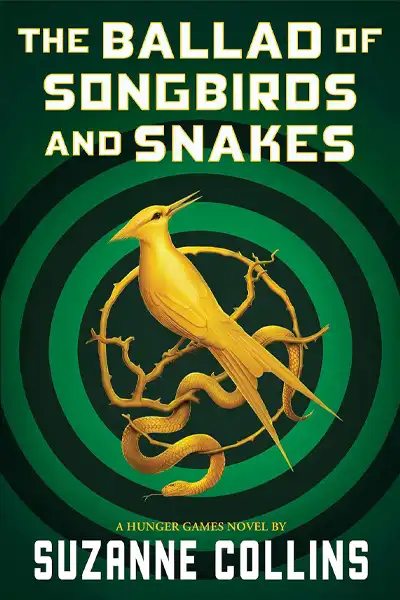
| Full Title | The Ballad of Songbirds and Snakes |
| Author Name | Suzanne Collins |
| Ghostwriter | No officially credited ghostwriter |
| Genre | Teen & Young Adult Fiction, Dystopian Fiction, Science Fiction, Political Fiction, Adventure, Prequel |
| First Publisher | Scholastic Press |
| First Publication Date | May 19, 2020 |
| Formats Available | Hardcover, Paperback, eBook, Kindle Edition, Audiobook, Library Edition, Special Editions |
| Number of Pages | 517 pages (first edition hardcover; page count can vary by format and region) |
| Series | Yes — A prequel novel in The Hunger Games series, set 64 years before the original trilogy |
| Edition | Multiple editions worldwide, including first edition hardcover, paperback, deluxe editions, movie tie-in editions, audiobook, and translated international releases |
| Original Language | English |
| Languages Available | Dozens of global languages; translation rights were sold in at least 28 territories before release |
| Recommended Age Group | Ages 13+ / Teen & Young Adult, though many adult readers also enjoy it |
| Book Dimensions | About 6.1 x 1.8 x 9.1 inches (may vary slightly by edit |
| Approx. Copies Sold | Part of The Hunger Games franchise, which has sold over 100 million copies globally; this title launched with a 2.5 million-copy first printing and became a major bestseller |
| ISBN-10 | 1338635174 |
| ISBN-13 | 978-1338635171 |
| Country of Origin | United States |
Read Inside This Book
Inside this book.
About The Ballad of Songbirds and Snakes – Summary with Conclusion
The Ballad of Songbirds and Snakes takes readers back to Panem long before Katniss Everdeen’s rebellion, revealing the early life of Coriolanus Snow before he becomes the ruthless president known in The Hunger Games. This prequel shifts the focus from survival alone to ambition, morality, and the dangerous pull of power.
Set during the 10th Hunger Games, the story follows eighteen-year-old Snow as he struggles to restore his family’s fading status. Assigned to mentor Lucy Gray Baird, a tribute from District 12, he initially sees her as an opportunity to secure his future. However, as their connection grows, Snow faces increasingly difficult choices between compassion and self-interest. The novel explores how fear, social pressure, and personal ambition can slowly reshape a person’s values.
What makes this book compelling is its psychological depth. Rather than presenting evil as immediate, Suzanne Collins shows how power can develop through compromise, insecurity, and rationalization. Lucy Gray’s unpredictability also adds emotional complexity, balancing charm with mystery.
Conclusion
The Ballad of Songbirds and Snakes offers a darker, thought-provoking expansion of Panem. It examines how ambition can overpower morality, making it a gripping prequel that deepens the entire Hunger Games universe while challenging readers to consider how leaders are truly made.
Contents of this Book.
Table of Contents — The Ballad of Songbirds and Snakes
Part I: “The Mentor”
Chapter 1 – Chapter 10
Part II: “The Prize”
Chapter 11 – Chapter 20
Part III: “The Peacekeeper”
Chapter 21 – Chapter 30
Chapter-wise Summary.
Chapter-wise Summary: The Ballad of Songbirds and Snakes
Part I: The Mentor
Chapter 1
Young Coriolanus Snow struggles with his family’s declining wealth while maintaining appearances in Capitol society. The upcoming Hunger Games become his chance to restore status.
Chapter 2
Snow learns he will mentor Lucy Gray Baird, the District 12 female tribute. Her unusual public charm immediately sets her apart.
Chapter 3
Lucy Gray’s bold performance at the reaping captures attention, while Snow recognizes her potential strategic value.
Chapter 4
At the Academy, students prepare for mentorship, revealing how the Games are evolving politically and socially.
Chapter 5
Snow begins shaping Lucy Gray’s image, understanding that public perception may matter as much as survival.
Chapter 6
A violent bombing changes the Capitol atmosphere, exposing vulnerability beneath its power.
Chapter 7
Snow’s ambition sharpens as he seeks every advantage in the competition.
Chapter 8
Lucy Gray’s intelligence surprises Snow, making their alliance more complicated.
Chapter 9
Capitol manipulation becomes clearer as image and entertainment merge.
Chapter 10
Snow risks more personally to keep Lucy Gray competitive.
Part II: The Prize
Chapter 11
The 10th Hunger Games begin with brutal unpredictability.
Chapter 12
Lucy Gray uses performance and cunning instead of pure force.
Chapter 13
Snow bends rules to influence outcomes.
Chapter 14
Moral boundaries blur as ambition grows.
Chapter 15
Violence intensifies inside and outside the arena.
Chapter 16
Lucy Gray’s survival increases Snow’s emotional and political investment.
Chapter 17
Snow’s choices create dangerous consequences.
Chapter 18
Victory comes, but not without suspicion.
Chapter 19
Snow faces punishment despite success.
Chapter 20
His future shifts dramatically away from Capitol privilege.
Part III: The Peacekeeper
Chapter 21
Snow is sent to District 12 as a Peacekeeper, confronting a harsher world.
Chapter 22
Reunion with Lucy Gray deepens personal conflict.
Chapter 23
District life exposes inequality more directly.
Chapter 24
Snow’s ambition resurfaces despite new surroundings.
Chapter 25
Love, survival, and control begin colliding.
Chapter 26
Trust weakens as fear grows.
Chapter 27
Snow’s choices become increasingly ruthless.
Chapter 28
Lucy Gray’s fate turns uncertain.
Chapter 29
Snow embraces self-preservation over emotional loyalty.
Chapter 30
Returning to Capitol opportunity, Snow’s transformation into the future tyrant becomes chillingly clear.
Key Themes & Takeaways.
Key Themes & Takeaways of The Ballad of Songbirds and Snakes
Power can slowly reshape morality
The novel shows how ambition rarely becomes dangerous overnight. Small compromises, fear, and self-interest gradually transform Snow’s values.
Survival often competes with ethics
Characters repeatedly face choices where staying safe may require betraying principles, revealing how pressure can distort judgment.
Image and performance influence control
Public perception matters deeply, from Lucy Gray’s charm to Snow’s calculated behavior, showing that power often depends on storytelling.
Class insecurity fuels ambition
Snow’s fear of losing status drives many decisions, highlighting how personal insecurity can become politically destructive.
Love and trust remain fragile under power struggles
Relationships in the book are shaped by suspicion, control, and competing goals rather than simple romance.
Systems evolve through manipulation
The Hunger Games themselves begin shifting from punishment into spectacle, showing how institutions can grow more dangerous through strategic reinvention.
Best Short Quotes from this Book.
Best Short Quotes from The Ballad of Songbirds and Snakes
* “Snow lands on top.”
* “Nothing you can take from me was ever worth keeping.”
* “It’s the things we love most that destroy us.”
* “People aren’t so bad, really. It’s what the world does to them.”
* “The show’s not over until the mockingjay sings.”
* “I’m done explaining myself.”
* “You can’t make me not sing.”
* “Everyone is born good.”
* “Chaos is what killed the old world.”
* “Control. That’s the key.”
Who Should Read this Book?
Who Should Read The Ballad of Songbirds and Snakes?
Fans of The Hunger Games universe
If you’ve ever wondered how President Snow became the person readers later fear, this prequel offers revealing psychological depth and fascinating backstory.
Readers who enjoy villain origin stories
This book (The Ballad of Songbirds and Snakes) is especially compelling for those interested in how ambition, fear, and personal insecurity can gradually shape someone’s darker choices.
Teen and young adult readers who like dystopian fiction
It blends survival, politics, and emotional complexity while offering a more reflective tone than traditional action-heavy YA novels.
People interested in political or psychological themes
The story examines propaganda, social class, control, and moral compromise, making it appealing beyond simple adventure.
Readers who appreciate morally complex protagonists
Snow is intelligent, ambitious, and often unsettling, which creates a more layered reading experience than straightforward hero narratives.
Book clubs and discussion-focused readers
Its questions about ethics, power, and identity can spark strong conversation.
Emotional Impact of this Book.
Emotional Impact of The Ballad of Songbirds and Snakes
How the Book (The Ballad of Songbirds and Snakes) Makes You Feel
This story creates a quieter but deeply unsettling emotional experience. Instead of immediate rebellion, it builds tension through ambition, insecurity, and gradual moral decline. Readers may feel fascinated, uneasy, and sometimes conflicted as they watch Coriolanus Snow’s humanity wrestle with his hunger for control. It often feels less like witnessing sudden evil and more like watching someone slowly justify becoming dangerous.
Memorable Moments
Lucy Gray’s reaping instantly stands out because of her bold unpredictability. Her music adds rare emotional warmth in a world shaped by fear. Snow’s strategic decisions throughout the Games feel gripping because each choice reveals more about who he is becoming. The District 12 chapters often leave a lingering emotional weight, especially as trust begins to erode.
Relatable Experiences
While most readers will never face Panem’s brutality, many can understand insecurity, fear of failure, social pressure, or the temptation to protect personal success at moral cost.
Strengths of this book.
Strengths of The Ballad of Songbirds and Snakes
Offers a fascinating villain origin story
Instead of presenting President Snow as simply cruel, the novel carefully explores how ambition, fear, and insecurity gradually shape his worldview.
Strong psychological depth
The book (The Ballad of Songbirds and Snakes) spends significant time inside Snow’s thoughts, allowing readers to witness moral compromise in a way that feels layered and unsettling.
Expands the Hunger Games universe meaningfully
By exploring the 10th Hunger Games, it reveals how the deadly spectacle evolved, adding historical richness rather than feeling like unnecessary backstory.
Complex moral tension
The story avoids easy heroes and villains, making readers question motivation, ethics, and the line between survival and manipulation.
Lucy Gray Baird is unpredictable and memorable
Her music, intelligence, and mystery create emotional contrast against Snow’s calculated nature.
Explores power before absolute corruption
Seeing Snow before full tyranny makes the dangers of unchecked ambition feel more realistic.
Political and social commentary remains sharp
Class division, image control, and propaganda are woven naturally into the story.
Balances personal emotion with broader societal themes
Love, status, fear, and power all intersect, giving the novel both intimacy and scale.
Weaknesses or Limitations of this Book.
Weaknesses or Limitations of The Ballad of Songbirds and Snakes
Slower pacing than the original trilogy
Readers expecting nonstop arena intensity may find this prequel more deliberate, especially since it spends significant time on Snow’s internal thinking and political development.
Snow can feel emotionally distant
Because Coriolanus often analyzes situations strategically, some readers may struggle to connect with him on the same emotional level as Katniss.
Less immediate action in certain sections
The story often prioritizes psychological tension and social commentary over constant physical danger, which may not appeal to everyone.
Lucy Gray’s mystery may frustrate some readers
Her unpredictability is compelling, but her ambiguity can also leave readers wanting clearer answers.
Dense political and philosophical themes
Questions about control, human nature, and governance add depth, but they may feel heavier for readers seeking simpler entertainment.
Ending leaves emotional uncertainty
The unresolved elements fit the novel’s tone, yet some readers may prefer stronger closure.
Comparison to the original series can be difficult
Fans attached to Katniss’s rebellion may naturally compare this book (The Ballad of Songbirds and Snakes) to earlier installments, sometimes expecting the same structure or emotional style.
Longer setup before major payoff
Much of the story builds slowly before Snow’s transformation fully sharpens.
FAQ Section.
FAQ: The Ballad of Songbirds and Snakes
1. Do I need to read The Hunger Games trilogy first?
No, this prequel can stand on its own. However, readers familiar with the original series may appreciate the deeper connections and early clues about Panem’s future.
2. Is this book (The Ballad of Songbirds and Snakes) mainly about President Snow?
Yes. It explores Coriolanus Snow’s youth, showing how ambition, fear, and personal choices slowly shape the leader he eventually becomes.
3. Is it as action-packed as the original Hunger Games books?
Not exactly. While it includes suspense and danger, this story focuses more on psychology, politics, and character transformation.
4. Who is Lucy Gray Baird, and why is she important?
Lucy Gray is Snow’s District 12 tribute, but she becomes far more than a competitor. Her intelligence, music, and unpredictability deeply influence Snow’s journey.
5. Is this book (The Ballad of Songbirds and Snakes) darker than the original trilogy?
In many ways, yes. Its darkness often comes from moral choices, manipulation, and the slow development of power rather than only physical violence.
6. Will fans of dystopian fiction enjoy it?
Absolutely. It offers social commentary, political strategy, survival tension, and emotional complexity.
7. Does the book (The Ballad of Songbirds and Snakes) explain how the Hunger Games became what they are later?
Yes. It reveals the early evolution of the Games and how entertainment, propaganda, and control became central.
8. Is this (The Ballad of Songbirds and Snakes) a good choice for readers who enjoy complex characters?
Definitely. Snow’s layered personality makes this especially appealing for readers interested in flawed, morally complicated protagonists.
About the author


Final Verdict :
The Ballad of Songbirds and Snakes is a gripping, psychologically rich prequel that trades pure spectacle for deeper political and emotional complexity, offering a haunting look at ambition, morality, and the chilling rise of future tyranny.
- Book Rating:9.2