
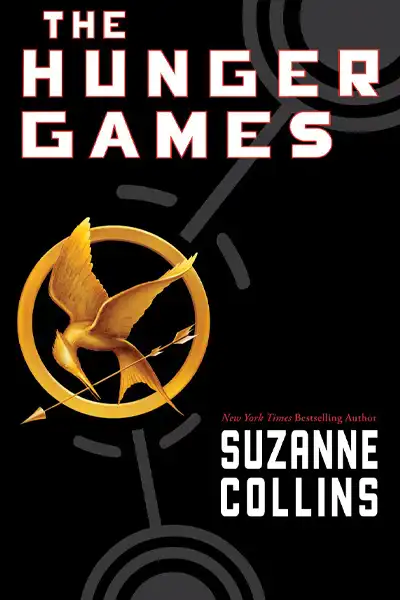
| Full Title | The Hunger Games |
| Author Name | Suzanne Collins |
| Ghostwriter | No officially credited ghostwriter |
| Genre | Young Adult, Dystopian Fiction, Science Fiction, Adventure |
| First Publisher | Scholastic Press (an imprint of Scholastic Corporation) |
| First Publication Date | September 14, 2008 |
| Formats Available | Hardcover, Paperback, eBook, Audiobook, Kindle, Mass Market Paperback |
| Number of Pages | 374 pages (first hardcover edition; page counts vary slightly by edition) |
| Series | Yes — Book One of The Hunger Games series |
| Edition | Numerous global editions, including anniversary, illustrated, collector’s, educational, and international versions |
| Original Language | Original Language: English |
| Languages Available | Dozens of languages worldwide, including Spanish, French, German, Hindi, Bengali, Japanese, Chinese, and more |
| Recommended Age Group | 12+ / Teen and Young Adult, though many adults also enjoy it |
| Book Dimensions | About 6.25 x 1.5 x 9.25 inches (varies by format) |
| Approx. Copies Sold | 100+ million copies (series-wide global sales; Book One remains the flagship bestseller) |
| ISBN-10 | 0439023483 |
| ISBN-13 | 978-0439023481 |
| Country of Origin | United States |
Read Inside This Book
Inside this book.
About The Hunger Games
The Hunger Games is more than a survival story. It places readers inside a harsh world where fear becomes entertainment and courage becomes rebellion. Set in the nation of Panem, the book follows Katniss Everdeen, a teenage girl who volunteers to protect her sister and enters a deadly public competition where only one participant can survive.
What makes this novel memorable is not just the danger of the arena, but the emotional pressure behind every decision. Katniss must balance survival with humanity. She hunts, calculates, and adapts, yet she also struggles with loyalty, compassion, and public image. This creates a layered story where action and emotion move together.
Suzanne Collins uses a fast-moving plot, but beneath it sits a deeper message about inequality, control, and how societies can normalize cruelty. For example, the Capitol’s luxury sharply contrasts with the suffering of poorer districts, making the story feel like both fiction and warning.
The writing stays accessible, which helps younger readers connect quickly, while the themes offer enough depth for older audiences.
Conclusion
The Hunger Games stands out because it combines suspense with meaningful questions about power, sacrifice, and identity. It is a gripping read that entertains while quietly challenging how people view justice and survival.
Contents of this Book.
Table of Contents — The Hunger Games
Part I: “The Tributes”
Chapter 1 – Chapter 9
Part II: “The Games”
Chapter 10 – Chapter 18
Part III: “The Victor”
Chapter 19 – Chapter 27
Chapter-wise Summary.
Chapter-wise Summary: The Hunger Games
Part I: “The Tributes”
Chapter 1
Katniss Everdeen wakes in District 12, focused on survival and family. She hunts beyond the fence and shares a protective bond with Prim, showing early how responsibility shapes her daily life.
Chapter 2
At the Reaping, Prim’s name is chosen. Katniss instantly volunteers, replacing her sister. This decision changes everything and reveals her fierce loyalty.
Chapter 3
Katniss says goodbye to loved ones before leaving home. She meets Haymitch and Peeta on the train, where fear, uncertainty, and strategy begin to mix.
Chapter 4
Effie and Haymitch explain the brutal reality of the Games. Katniss starts understanding that survival may depend as much on image as skill.
Chapter 5
Stylists prepare Katniss for public attention. Cinna creates a fiery entrance, transforming her into a symbol people notice.
Chapter 6
The opening ceremony introduces Katniss and Peeta to Panem. Their appearance sparks interest and begins shaping public perception.
Chapter 7
Training starts. Katniss studies competitors carefully, realizing strength alone will not guarantee survival.
Chapter 8
Peeta’s private warning about losing himself in the Games makes Katniss think beyond physical survival.
Chapter 9
During evaluation, Katniss shocks officials with bold skill. Her unexpected act earns attention and proves she will not be ignored.
Part II: “The Games”
Chapter 10
Katniss prepares mentally before entering the arena. Fear feels real, but survival instincts remain stronger.
Chapter 11
The Games begin violently. Katniss avoids direct chaos, grabs supplies, and chooses strategy over reckless action.
Chapter 12
She escapes danger and heads into the woods. Isolation becomes both protection and challenge.
Chapter 13
Katniss faces physical exhaustion, fire, and tracker jackers. The arena proves dangerous in unexpected ways.
Chapter 14
She drops a tracker jacker nest on Careers, gaining an advantage while showing clever survival thinking.
Chapter 15
Katniss allies briefly with Rue, creating one of the story’s most emotional partnerships.
Chapter 16
Rue and Katniss destroy supplies together. Their teamwork offers hope inside brutality.
Chapter 17
Rue’s death deeply affects Katniss. Her response becomes personal, emotional, and quietly rebellious.
Chapter 18
A rule change allows two winners from the same district. Katniss begins searching for Peeta.
Part III: “The Victor”
Chapter 19
Katniss finds Peeta injured and hiding. She shifts from solo survival to partnership.
Chapter 20
She cares for Peeta while balancing danger, strategy, and growing emotional complexity.
Chapter 21
Their bond becomes part survival, part performance. Public image influences choices more deeply.
Chapter 22
Katniss risks herself to gather medicine. Sacrifice becomes central to her growth.
Chapter 23
The feast forces difficult choices. Katniss faces physical and emotional tests.
Chapter 24
Mutts and final dangers intensify pressure. Survival now demands endurance and trust.
Chapter 25
Katniss and Peeta outlast remaining threats. Victory feels close but uncertain.
Chapter 26
The rule change is revoked. Katniss chooses defiance with the berries, challenging control itself.
Chapter 27
Katniss and Peeta return as victors, but survival brings new political consequences beyond the arena.
Key Themes & Takeaways.
Key Themes & Takeaways of The Hunger Games
Survival goes beyond physical strength
Katniss survives not just because she can hunt, but because she adapts quickly, reads people well, and makes difficult choices under pressure.
Power can control through fear
The Capitol uses the Games as entertainment, but also as a warning. This reflects how systems can use fear to maintain authority.
Love and loyalty shape courage
Katniss volunteering for Prim shows that deep care can push ordinary people into extraordinary action.
Public image influences reality
In the arena, perception matters. Katniss learns that how people see you can sometimes protect you as much as skill.
Humanity matters in cruel systems
Rue’s friendship reminds readers that kindness can survive even in brutal environments.
Small acts can spark resistance
Katniss’s choices often begin as personal survival, yet they quietly challenge injustice.
Best Short Quotes from this Book.
Best Short Quotes from The Hunger Games
“May the odds be ever in your favor.”
“I volunteer as tribute!”
“Hope is the only thing stronger than fear.”
“Remember who the real enemy is.”
“Destroying things is much easier than making them.”
“Fire is catching! And if we burn, you burn with us!”
“Stupid people are dangerous.”
“You don’t forget the face of the person who was your last hope.”
“I am not pretty. I am not beautiful. I am as radiant as the sun.”
“Deep in the meadow, under the willow.”
Who Should Read this Book?
Who Should Read The Hunger Games?
Teen and young adult readers who enjoy high-stakes stories
If you like fast decisions, emotional tension, and characters forced to grow quickly, this book (The Hunger Games) delivers a strong reading experience.
Readers who enjoy survival and strategy
The story (The Hunger Games) is not only about danger. It also explores planning, adaptability, and reading situations carefully—similar to solving pressure-filled real-life problems.
Fans of dystopian fiction
If you are interested in societies shaped by control, inequality, and resistance, this book (The Hunger Games) offers both action and deeper social questions.
People who enjoy strong female leads
Katniss feels practical, protective, and emotionally layered. She makes hard choices without losing her human side.
Readers exploring social themes through fiction
The book (The Hunger Games) examines power, media, and class difference in ways that feel relevant beyond its fictional world.
Adults looking for accessible but meaningful fiction
Even though it is YA, its themes reach far beyond one age group.
Emotional Impact of this Book.
Emotional Impact of The Hunger Games
How the Book Makes You Feel
This story (The Hunger Games) creates constant emotional pressure. From the first pages, fear and urgency feel immediate, but beneath that tension sits something deeper—care, sacrifice, and resilience. You feel Katniss’s anxiety, but you also notice her determination. The book (The Hunger Games) often leaves readers tense, hopeful, and emotionally alert at the same time.
Memorable Moments
Katniss volunteering for Prim is unforgettable because it feels sudden yet deeply human. Rue’s death hits differently—it shifts the story from survival to grief. The berries scene stands out because it turns desperation into defiance. These moments stay powerful because they connect emotion with action.
Relatable Experiences
While few readers face literal survival arenas, many understand pressure, responsibility, or protecting loved ones. Katniss carrying family burdens can feel similar to someone stepping up during financial hardship or personal crisis. The fear of being watched, judged, or controlled also mirrors modern social pressures.
Strengths of this book.
Strengths of The Hunger Games
Fast-moving and gripping plot
The story wastes little time. Each chapter adds pressure, which keeps readers engaged and makes it difficult to stop reading.
Strong and believable main character
Katniss feels practical, flawed, and deeply human. Her choices often come from responsibility, which makes her relatable beyond the fictional setting.
Emotional depth beyond action
The book (The Hunger Games) includes survival, but it also explores grief, loyalty, fear, and moral conflict. This balance gives the story lasting impact.
Powerful social commentary
Themes like inequality, media manipulation, and control make the story feel meaningful, not just entertaining.
Accessible writing style
The language stays clear and direct, allowing younger readers to follow easily while still holding emotional weight for adults.
Memorable supporting characters
Rue, Peeta, Haymitch, and Cinna each add different emotional layers without feeling unnecessary.
High tension with strategic thinking
Survival depends on more than strength. Intelligence, image, and adaptability matter, adding complexity.
Weaknesses or Limitations of this Book.
Weaknesses or Limitations of The Hunger Games
Secondary characters sometimes receive limited depth
While Katniss feels fully developed, some tributes and side characters appear briefly, which can reduce emotional connection in certain moments.
World-building leaves some questions unanswered
Panem feels intriguing, but readers may want more detail about how society fully functions beyond the districts and arena.
Romantic tension can feel strategic
At times, the relationship dynamic between Katniss and Peeta may seem shaped more by survival than emotional clarity, which may frustrate some readers.
First-person perspective narrows the view
Seeing events only through Katniss creates intensity, but it also limits broader understanding of other characters’ motivations.
Violence may feel intense for sensitive readers
Although not overly graphic, the premise itself is emotionally heavy because children are forced into deadly conflict.
Some plot elements rely on convenience
Certain twists or survival moments may feel slightly engineered to maintain pace.
FAQ Section.
FAQ: The Hunger Games
1. What makes this book so engaging for first-time readers?
It combines survival, emotional tension, and fast decisions from the very beginning. The story quickly creates urgency while also building strong personal stakes.
2. Is this book only for teenagers?
Not at all. While it is written for young adults, its themes—power, inequality, sacrifice, and media influence—connect with adult readers too.
3. Does the story focus only on action?
No. The action is intense, but the emotional core matters just as much. Family loyalty, grief, and moral choices shape the story deeply.
4. Is Katniss a relatable main character?
Yes. She feels practical and human, not perfect. Her struggles with fear, responsibility, and difficult decisions make her easy to connect with.
5. Is the violence too extreme?
The concept is serious, but the writing focuses more on emotional impact and survival than unnecessary graphic detail.
6. What makes this dystopian world different?
The story uses entertainment as control, which adds a sharp social layer. It feels imaginative while still reflecting real-world issues.
7. Will readers want to continue the series?
Very likely. Book One ends satisfyingly, but it also opens bigger questions that naturally pull readers forward.
8. Is it easy to read?
Yes. The writing style is direct, accessible, and emotionally effective without feeling overly complex.
About the author



Final Verdict :
The Hunger Games delivers sharp suspense, emotional weight, and meaningful social themes through a gripping survival story. It suits readers who want fast pacing, strong characters, and deeper questions about power, sacrifice, and human resilience.
- Book Rating:9.4