
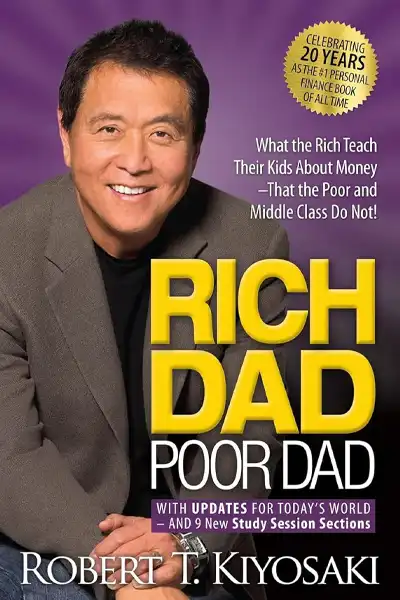
| Full Title | Rich Dad Poor Dad: What the Rich Teach Their Kids About Money That the Poor and Middle Class Do Not! |
| Author Name | Robert Toru Kiyosaki |
| Ghostwriter | No officially credited ghostwriter. However, Sharon L. Lechter co-authored the original 1997 edition. |
| Genre | Non-fiction; Personal Finance; Self-Help; Investing; Business |
| First Publisher | Plata Publishing (self-published in 1997; later commercial editions were released by Warner Books) |
| First Publication Date | April 8, 1997 |
| Formats Available | Paperback, Hardcover, Mass Market Paperback, Kindle eBook, Audiobook, PDF, and Digital Editions |
| Number of Pages | The original edition contained approximately 207 pages; anniversary editions range from 294 to 336 pages depending on the publisher and format. |
| Series | Yes. It is the first book in the Rich Dad Series. |
| Edition | Hundreds of editions worldwide, including revised, anniversary, and translated editions. Goodreads lists 490+ editions. |
| Original Language | English |
| Languages Available | Originally published in English and translated into 51+ languages across 109+ countries. |
| Recommended Age Group | 16 years and above; suitable for young adults, college students, and adults interested in financial literacy. |
| Book Dimensions | A common paperback edition measures approximately 5.3 × 0.8 × 8.0 inches (13.5 × 2 × 20.3 cm). Dimensions vary by edition. |
| Approx. Copies Sold | Over 40 million copies sold worldwide (according to Robert Kiyosaki’s later estimates). Earlier reports confirmed over 32 million copies sold. |
| ISBN-10 | 1612680178 (20th Anniversary Paperback Edition) |
| ISBN-13 | 9781612680170 (20th Anniversary Paperback Edition) |
| Country of Origin | United States |
Read Inside This Book
Inside this book.
About Book Summary of Rich Dad Poor Dad
Rich Dad Poor Dad is one of the most influential personal finance books ever written. In this book, Robert T. Kiyosaki shares the lessons he learned from two father figures in his life. His biological father, referred to as the “Poor Dad,” believed in traditional education, job security, and working hard for money. In contrast, his friend’s father, the “Rich Dad,” encouraged financial education, investing, and making money work for you.
Through simple stories and practical examples, the book challenges common beliefs about wealth and success. It explains the difference between assets and liabilities and highlights why financial literacy is just as important as academic achievement. Rather than promoting quick riches, Kiyosaki encourages readers to develop smart money habits and think differently about earning and managing income.
One of the book’s strongest messages is that financial independence often begins with changing your mindset. The author inspires readers to take responsibility for their financial future, learn continuously, and seek opportunities beyond a regular paycheck. Many of the ideas presented remain relevant because they focus on long-term thinking rather than short-term gains.
Conclusion
Rich Dad Poor Dad offers a fresh perspective on money and personal growth. It encourages readers to question traditional financial advice and build a stronger foundation for future wealth. For anyone interested in improving financial awareness, this book serves as an insightful and motivating starting point.
Contents of this Book.
Table of Contents of Rich Dad Poor Dad
Table of Contents
Introduction: Rich Dad Poor Dad
Chapter One
Lesson One: The Rich Don’t Work for Money
Chapter Two
Lesson Two: Why Teach Financial Literacy?
Chapter Three
Lesson Three: Mind Your Own Business
Chapter Four
Lesson Four: The History of Taxes and the Power of Corporations
Chapter Five
Lesson Five: The Rich Invent Money
Chapter Six
Lesson Six: Work to Learn – Don’t Work for Money
Chapter Seven
Overcoming Obstacles
Chapter Eight
Getting Started
Chapter Nine
Still Want More? Here Are Some To Do’s
Final Thoughts
Chapter-wise Summary.
Chapter-wise Summary of Rich Dad Poor Dad
Introduction: Rich Dad Poor Dad
Robert Kiyosaki introduces the contrasting financial philosophies of his two father figures—his educated but financially struggling “poor dad” and his friend’s wealthy, self-made “rich dad.” Their opposing views on money shaped the author’s understanding of wealth, work, and financial independence.
Chapter One: Lesson 1: The Rich Don’t Work for Money
This chapter explains how fear and the desire for security often keep people trapped in a cycle of earning and spending. Rich Dad encourages Robert to think differently, use money as a tool, and seek opportunities that create long-term financial freedom.
Chapter Two: Lesson 2: Why Teach Financial Literacy?
Kiyosaki emphasizes that earning a high income alone does not guarantee wealth. Understanding assets, liabilities, and cash flow is essential. He argues that financial education helps people make smarter decisions and build a more secure future.
Chapter Three: Lesson 3: Mind Your Own Business
The author encourages readers to focus on building assets outside their regular jobs. Whether it is investments, businesses, or intellectual property, developing income-producing resources can provide stability beyond a monthly paycheck.
Chapter Four: Lesson 4: The History of Taxes and the Power of Corporations
This chapter explores how taxes evolved and how corporations can offer financial advantages when managed responsibly. Rich Dad highlights the importance of understanding legal financial structures instead of simply working harder to earn more.
Chapter Five: Lesson 5: The Rich Invent Money
Kiyosaki explains that wealthy individuals often spot opportunities where others see obstacles. Financial intelligence, creativity, and the willingness to learn can help people identify investments and solutions that increase their earning potential.
Chapter Six: Lesson 6: Work to Learn—Don’t Work for Money
Rather than chasing higher salaries alone, Rich Dad advises gaining diverse skills through different experiences. Sales, communication, management, and leadership abilities can open doors that technical expertise by itself may not unlock.
Chapter Seven: Overcoming Obstacles
Many people understand financial principles but hesitate to apply them due to fear, self-doubt, or uncertainty. This chapter discusses common mental barriers and encourages readers to develop confidence through learning and practical action.
Chapter Eight: Getting Started
Kiyosaki provides practical guidance for those beginning their financial journey. He stresses the value of setting goals, maintaining discipline, expanding financial knowledge, and surrounding oneself with people who inspire growth.
Chapter Nine: Still Want More? Here Are Some To Do’s
The final chapter offers actionable suggestions for continuing financial education. Readers are encouraged to attend seminars, read widely, seek mentors, and remain curious because building wealth is an ongoing learning process.
Final Thoughts
Robert Kiyosaki concludes by reinforcing that financial success depends not only on income but also on mindset, education, and consistent action. Small changes in habits and perspectives can gradually lead to greater financial independence.
Key Themes & Takeaways.
Key Themes & Takeaways of Rich Dad Poor Dad
- Financial education matters: Understanding how money works can be more valuable than earning a high salary.
- Know the difference between assets and liabilities: Building assets that generate income is a key step toward long-term wealth.
- Don’t rely on one source of income: Side businesses, investments, and passive income streams can create financial stability.
- Mindset shapes financial choices: The way people think about money often influences their financial outcomes.
- Work to gain skills, not just paychecks: Communication, leadership, and problem-solving abilities can increase future opportunities.
- Take calculated risks: Wealth creation often requires stepping outside familiar routines and exploring new possibilities.
- Overcome fear and self-doubt: Financial growth begins when people act despite uncertainty and continue learning from experience.
- Financial freedom is a journey: Small, consistent decisions today can gradually build a more secure and independent future.
Best Short Quotes from this Book.
Short and memorable quotes from Rich Dad Poor Dad
* “The rich don’t work for money.”
* “The poor and the middle class work for money.”
* “It’s not how much money you make.”
* “It’s how much money you keep.”
* “An asset puts money in your pocket.”
* “A liability takes money out of your pocket.”
* “The single most powerful asset we all have is our mind.”
* “Workers work hard enough not to be fired.”
* “The more a person seeks security, the more that person gives up control.”
* “Financial struggle is often the direct result of people working all their lives for someone else.”
* “Don’t let the fear of losing be greater than the excitement of winning.”
* “The love of money is not the root of all evil. The lack of money is.”
Who Should Read this Book?
Who Should Read Rich Dad Poor Dad?
Beginners in personal finance: If money management feels confusing, this book introduces financial concepts in a straightforward and easy-to-follow way.
Young adults starting their careers: Those entering the workforce can gain a fresh perspective on earning, saving, and planning for the future.
Employees seeking financial independence: Readers who rely solely on a monthly paycheck may discover new ways to think about long-term wealth building.
Aspiring entrepreneurs: Anyone interested in business ownership can explore ideas about creating income beyond traditional employment.
People looking to improve their money mindset: The book challenges common beliefs about wealth and encourages readers to rethink their financial habits.
Parents and educators: It can spark meaningful conversations about teaching children practical money skills that are often overlooked in formal education.
Readers interested in self-development: Beyond finances, the book highlights the importance of learning, adaptability, and taking responsibility for personal growth.
Note: Readers seeking detailed investment strategies or step-by-step financial plans may find this book more valuable as a mindset-shifting introduction rather than a comprehensive financial guide.
Emotional Impact of this Book.
Emotional Impact of Rich Dad Poor Dad
How the Book Makes You Feel
Rich Dad Poor Dad often leaves readers feeling both challenged and encouraged. It pushes you to question long-held beliefs about money, careers, and success. At times, the ideas can feel unsettling because they challenge familiar paths. Yet, that discomfort is often followed by motivation—the feeling that small financial decisions today can shape a different tomorrow.
Memorable Moments
The conversations between Rich Dad and Poor Dad create some of the book’s most powerful moments. Seeing two respected adults offer completely different advice about money makes a lasting impression. Another standout idea is the distinction between assets and liabilities. Its simplicity encourages readers to reassess everyday purchases through a new lens.
Relatable Experiences
Many readers recognize the routine of working hard, paying bills, and waiting for financial stress to ease. The book (Rich Dad Poor Dad) captures these common experiences without judgment. Whether it is relying on a steady paycheck, worrying about expenses, or wanting greater financial freedom, the situations feel familiar. This relatability helps readers connect the book’s lessons to their own lives and inspires them to take a more active role in their financial future.
Strengths of this book.
Strengths of Rich Dad Poor Dad
Makes financial concepts easy to understand: The book (Rich Dad Poor Dad) breaks down money-related ideas into simple lessons that readers with little financial knowledge can grasp quickly.
Encourages a shift in mindset: It challenges traditional beliefs about employment, savings, and wealth, prompting readers to think differently about their financial future.
Uses storytelling effectively: The contrast between Rich Dad and Poor Dad turns abstract financial ideas into memorable life lessons that are easier to connect with emotionally.
Highlights the importance of financial education: The book (Rich Dad Poor Dad) reminds readers that schools may teach professional skills, but understanding money requires intentional learning.
Promotes long-term thinking: Instead of focusing only on immediate income, it encourages building assets that can support future financial stability.
Inspires personal responsibility: Readers are encouraged to take charge of their financial decisions rather than depending entirely on employers or external circumstances.
Motivates readers to take action: The practical tone often inspires people to review their spending habits, learn new skills, or explore additional income opportunities.
Appeals to a broad audience: Whether someone is a student, employee, entrepreneur, or simply curious about personal finance, the book presents ideas in an accessible way.
Introduces key money concepts early: Topics such as cash flow, assets, liabilities, and financial independence provide a useful foundation for further learning.
Creates lasting reflection: Even after finishing the book, many readers continue to question their financial habits and consider new approaches to managing money.
Weaknesses or Limitations of this Book.
Weaknesses or Limitations of Rich Dad Poor Dad
Offers limited step-by-step guidance: While the book inspires readers to think differently about money, it provides few detailed instructions on how to apply its ideas in specific financial situations.
Relies heavily on personal anecdotes: Many lessons are presented through stories and experiences, which may not resonate equally with every reader or reflect all financial realities.
Oversimplifies certain financial concepts: The distinction between assets and liabilities is useful, but real-world financial decisions are often more complex than the examples suggest.
May underestimate the value of traditional careers: The book frequently challenges conventional employment paths, even though stable jobs remain an important foundation for many people’s financial goals.
Provides limited discussion of risk management: Building wealth involves uncertainty, yet the book spends less time addressing strategies for handling financial setbacks or investment risks.
Lacks updated context for modern financial environments: Some examples reflect the economic conditions of an earlier period and may require readers to adapt the ideas to today’s landscape.
Focuses more on mindset than execution: The book excels at motivating readers but may leave those seeking practical investment frameworks wanting more concrete direction.
Generalizes financial experiences: Factors such as family responsibilities, access to resources, and economic circumstances can influence financial decisions in ways the book does not fully explore.
May not suit advanced readers: Individuals with a strong background in personal finance might find the concepts introductory rather than deeply analytical.
Requires critical thinking from readers: The ideas can be thought-provoking, but readers benefit most when they evaluate the advice carefully and adapt it to their own goals and circumstances.
FAQ Section.
FAQ About Rich Dad Poor Dad
1. Is Rich Dad Poor Dad worth reading for beginners?
Yes. The book presents financial ideas in a simple and approachable way. Readers with little knowledge of personal finance can easily follow the lessons and start thinking differently about money.
2. Does this book (Rich Dad Poor Dad) teach practical money lessons?
Rather than offering a strict financial formula, the book focuses on changing the way people view income, expenses, and long-term wealth. It encourages readers to become more financially aware in everyday life.
3. Can employees benefit from reading Rich Dad Poor Dad?
Absolutely. The book does not discourage employment; instead, it encourages readers to explore additional ways to build financial security beyond a regular paycheck.
4. Is Rich Dad Poor Dad only for people interested in business?
No. Students, professionals, parents, and anyone curious about improving their financial mindset can find value in its ideas and stories.
5. What makes this book (Rich Dad Poor Dad) different from other personal finance books?
Its storytelling approach sets it apart. By comparing two contrasting viewpoints about money, the book turns financial concepts into relatable life lessons.
6. Will this book (Rich Dad Poor Dad) help me become rich quickly?
No. The book does not promise instant success. Instead, it emphasizes learning, patience, disciplined decision-making, and developing better financial habits over time.
7. Is the language easy to understand?
Yes. The writing style is conversational and straightforward, making complex financial topics feel less intimidating for first-time readers.
8. Can teenagers and young adults read this book (Rich Dad Poor Dad)?
Definitely. Many readers consider it a useful introduction to financial thinking before entering the workforce or making major money decisions.
9. Does the book (Rich Dad Poor Dad) encourage readers to take control of their finances?
Yes. One of its strongest messages is that financial education and personal responsibility can empower people to make more informed choices about their future.
10. Why has Rich Dad Poor Dad remained popular for so many years?
The book continues to resonate because it challenges traditional assumptions about money and encourages readers to ask an important question: “Am I managing my finances intentionally, or simply following habits without examining them?”
About the author







Final Verdict :
Rich Dad Poor Dad is a thought-provoking introduction to financial literacy that encourages readers to question conventional money beliefs. While it focuses more on mindset than detailed strategies, its lessons can inspire meaningful conversations and smarter financial decisions.
- Book Rating:9.4