
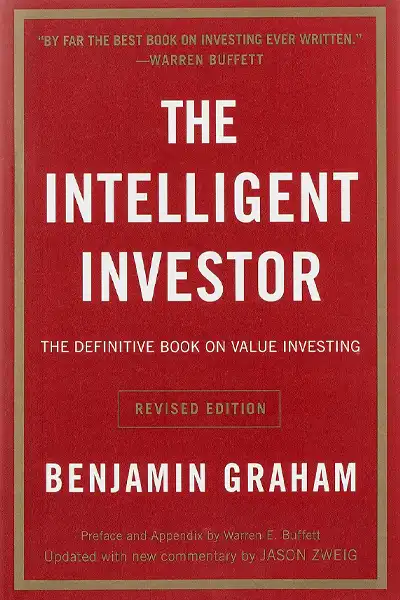
| Full Title | The Intelligent Investor Rev. Ed.: The Definitive Book on Value Investing |
| Author Name | Benjamin Graham |
| Ghostwriter | None. The book was written by Benjamin Graham. The revised edition contains commentary by Jason Zweig. |
| Genre | Non-Fiction, Investing, Personal Finance, Value Investing, Business & Economics |
| First Publisher | Harper & Brothers |
| First Publication Date | 1949 (Original Edition), Revised Edition Publication Date: October 8, 2003 |
| Formats Available | Paperback, Hardcover, eBook, Audio book, Kindle Edition |
| Number of Pages | 640 pages (2003 Revised Edition) |
| Series | No, it is a standalone book and not part of a series. |
| Edition | Multiple editions have been published since 1949, including several revised, annotated, and anniversary editions. |
| Original Language | English |
| Languages Available | English and numerous translated editions, including Spanish, Chinese, Japanese, Korean, German, French, Portuguese, Russian, Hindi, and many others. |
| Recommended Age Group | 16+ years, young adults, college students, investors, and adults interested in finance. |
| Book Dimensions | Approximately 13.5 × 3.6 × 20.3 cm |
| Approx. Copies Sold | More than 1 million copies worldwide (estimated; exact figures are not publicly disclosed). |
| ISBN-10 | 0060555661 |
| ISBN-13 | 9780060555665 |
| Country of Origin | United States |
Read Inside This Book
Inside this book.
About the Book: The Intelligent Investor
The Intelligent Investor Rev. Ed. by Benjamin Graham is widely regarded as one of the most influential books on investing ever written. Rather than focusing on market predictions or quick profits, the book teaches readers how to make thoughtful financial decisions based on patience, research, and long-term thinking.
At the heart of the book is the idea that successful investing is not about being smarter than everyone else. It is about staying disciplined and avoiding emotional decisions. Graham introduces readers to practical concepts such as value investing, risk management, and the importance of buying investments at sensible prices. He also explains how fear and excitement can affect financial choices, often leading investors away from their goals.
One of the book’s most memorable ideas is the distinction between investing and speculation. Graham encourages readers to approach the market with a clear strategy rather than treating it like a game of chance. Through examples and real-world insights, he demonstrates how consistent decision-making can often produce better results than chasing trends.
The revised edition includes commentary by Jason Zweig, who helps connect Graham’s timeless principles with modern financial markets. This makes the book more accessible to today’s readers while preserving its original lessons.
Conclusion
The Intelligent Investor Rev. Ed. remains a valuable guide for anyone interested in building financial knowledge. Its focus on patience, rational thinking, and long-term investing offers lessons that continue to resonate with readers decades after its first publication.
Contents of this Book.
Table of Contents of The Intelligent Investor
Preface to the Fourth Revised Edition, by Warren E. Buffett
A Note About Benjamin Graham, by Jason Zweig
Introduction: What This Book Expects to Accomplish
Chapter 1
Investment versus Speculation: Results to Be Expected by the Intelligent Investor
Chapter 2
The Investor and Inflation
Chapter 3
A Century of Stock-Market History: The Level of Stock Prices in Early 1972
Chapter 4
General Portfolio Policy: The Defensive Investor
Chapter 5
The Defensive Investor and Common Stocks
Chapter 6
Portfolio Policy for the Enterprising Investor: Negative Approach
Chapter 7
Portfolio Policy for the Enterprising Investor: The Positive Side
Chapter 8
The Investor and Market Fluctuations
Chapter 9
Investing in Investment Funds
Chapter 10
The Investor and His Advisers
Chapter 11
Security Analysis for the Lay Investor: General Approach
Chapter 12
Things to Consider About Per-Share Earnings
Chapter 13
A Comparison of Four Listed Companies
Chapter 14
Stock Selection for the Defensive Investor
Chapter 15
Stock Selection for the Enterprising Investor
Chapter 16
Convertible Issues and Warrants
Chapter 17
Four Extremely Instructive Case Histories
Chapter 18
A Comparison of Eight Pairs of Companies
Chapter 19
Shareholders and Managements: Dividend Policy
Chapter 20
“Margin of Safety” as the Central Concept of Investment
Postscript
Endnotes
Acknowledgements
About the Authors
Chapter-wise Summary.
Chapter-wise Summary of The Intelligent Investor
Chapter 1: Investment versus Speculation: Results to Be Expected by the Intelligent Investor
Graham explains the difference between investing and speculation. True investing involves careful analysis, protecting capital, and seeking reasonable returns. He encourages readers to avoid treating the stock market like a gambling arena driven by excitement and short-term trends.
Chapter 2: The Investor and Inflation
This chapter examines how inflation gradually reduces purchasing power. Graham discusses strategies investors can consider to protect their wealth over time and emphasizes the importance of balancing growth opportunities with financial stability.
Chapter 3: A Century of Stock-Market History: The Level of Stock Prices in Early 1972
By reviewing decades of market history, Graham shows that markets move through cycles of optimism and fear. Understanding these patterns can help investors make more thoughtful decisions instead of reacting emotionally.
Chapter 4: General Portfolio Policy: The Defensive Investor
Graham introduces the defensive investor, someone who prefers a straightforward approach. He explains how diversification and sensible asset allocation can help reduce unnecessary risks while supporting long-term financial goals.
Chapter 5: The Defensive Investor and Common Stocks
This chapter focuses on selecting common stocks suitable for cautious investors. Graham encourages readers to prioritize quality, stability, and financial strength rather than chasing fashionable investment opportunities.
Chapter 6: Portfolio Policy for the Enterprising Investor: Negative Approach
Enterprising investors often seek higher returns, but Graham advises them to avoid common mistakes. He highlights the importance of steering clear of overpriced securities and poorly researched investment decisions.
Chapter 7: Portfolio Policy for the Enterprising Investor: The Positive Side
Graham outlines opportunities available to proactive investors willing to dedicate time and effort to research. Careful analysis and patience can uncover investments that others may overlook.
Chapter 8: The Investor and Market Fluctuations
Market prices rise and fall regularly, but Graham encourages investors to remain calm during periods of volatility. Emotional discipline often proves more valuable than trying to predict every market movement.
Chapter 9: Investing in Investment Funds
This chapter explores investment funds as an option for individuals seeking diversification. Graham explains how these funds can provide market exposure while simplifying the investment process for many readers.
Chapter 10: The Investor and His Advisers
Financial advisers can offer valuable guidance, but Graham stresses the importance of independent thinking. Investors should understand their own objectives and evaluate advice carefully before taking action.
Chapter 11: Security Analysis for the Lay Investor: General Approach
Graham introduces readers to the basics of evaluating securities. Instead of relying solely on market sentiment, investors should assess a company’s financial condition and long-term prospects.
Chapter 12: Things to Consider About Per-Share Earnings
The author examines earnings reports and explains why investors should interpret them thoughtfully. Looking beyond headline figures can provide a clearer understanding of a company’s true performance.
Chapter 13: A Comparison of Four Listed Companies
Through a comparison of different businesses, Graham demonstrates how financial analysis can reveal strengths and weaknesses that may not be obvious at first glance.
Chapter 14: Stock Selection for the Defensive Investor
This chapter provides practical guidelines for selecting stocks that align with a conservative investment style. Graham emphasizes consistency, financial stability, and reasonable valuation.
Chapter 15: Stock Selection for the Enterprising Investor
Enterprising investors may pursue additional opportunities through deeper research. Graham highlights the importance of discipline and avoiding the temptation to follow popular market opinions blindly.
Chapter 16: Convertible Issues and Warrants
Graham explains investment instruments such as convertible securities and warrants. He encourages readers to understand their characteristics fully before including them in a portfolio.
Chapter 17: Four Extremely Instructive Case Histories
Real-life examples illustrate how investment decisions can lead to success or disappointment. Graham uses these case studies to reinforce the value of careful judgment and preparation.
Chapter 18: A Comparison of Eight Pairs of Companies
This chapter compares companies operating under different circumstances. Graham demonstrates how detailed evaluation can uncover meaningful differences beneath seemingly similar businesses.
Chapter 19: Shareholders and Managements: Dividend Policy
Graham explores the relationship between shareholders and company management. He discusses dividend policies and why investors should pay attention to how businesses allocate profits.
Chapter 20: “Margin of Safety” as the Central Concept of Investment
The book concludes with Graham’s most famous principle: the margin of safety. Allowing room for unexpected outcomes can help investors reduce risk and make wiser long-term decisions.
Postscript
The postscript revisits the book’s major themes and reinforces the importance of rational thinking, patience, and financial discipline throughout an investor’s journey.
Conclusion
The Intelligent Investor Rev. Ed. remains a timeless guide for readers seeking a thoughtful approach to investing. Its emphasis on discipline, research, and emotional control continues to offer valuable lessons for investors across generations.
Key Themes & Takeaways.
Key Themes & Takeaways of The Intelligent Investor
Invest with discipline, not emotion: Successful investing often depends on patience and rational decision-making rather than reacting to fear or market excitement.
Understand the difference between investing and speculation: Thoughtful analysis and long-term planning separate genuine investing from chasing quick profits.
Prioritize capital preservation: Protecting what you have is just as important as seeking growth opportunities.
Embrace the margin of safety: Buying investments with a buffer against uncertainty can help reduce the impact of unexpected setbacks.
Market fluctuations create opportunities: Price movements should not dictate decisions. Instead, investors can use them to reassess value objectively.
Diversification supports stability: Spreading investments across different assets can help manage risk more effectively.
Research matters: Understanding a company’s financial health encourages more informed investment choices.
Long-term thinking often outperforms short-term reactions: Consistency, patience, and a clear strategy can contribute to lasting financial success.
Best Short Quotes from this Book.
Best Short Quotes from The Intelligent Investor
* “The investor’s chief problem—and even his worst enemy—is likely to be himself.”
* “The intelligent investor is a realist who sells to optimists and buys from pessimists.”
* “In the short run, the market is a voting machine, but in the long run, it is a weighing machine.”
* “To achieve satisfactory investment results is easier than most people realize.”
* “To achieve superior investment results is harder than it looks.”
* “The essence of investment management is the management of risks, not the management of returns.”
* “The individual investor should act consistently as an investor and not as a speculator.”
* “Successful investing is about managing risk, not avoiding it.”
* “Investment is most intelligent when it is most businesslike.”
* “The purpose of the margin of safety is to render the forecast unnecessary.”
* “People who invest make money for themselves; people who speculate make money for their brokers.”
* “The value of market fluctuations will depend on your reaction to them.”
Who Should Read this Book?
Who Should Read The Intelligent Investor
Beginner investors looking for a strong foundation: If you are new to investing and want to understand how to approach the market thoughtfully, this book offers valuable guidance that goes beyond market headlines and trends.
Long-term investors who value patience: Readers interested in building wealth gradually rather than chasing quick gains will appreciate Graham’s disciplined approach to investing.
Young adults and college students interested in personal finance: Those starting their financial journey can gain practical insights into risk, decision-making, and the importance of developing sound investing habits early.
Professionals planning for future financial goals: Individuals saving for retirement, children’s education, or long-term security may find the book’s emphasis on steady decision-making especially relevant.
Readers who want to manage emotions around money: The book (The Intelligent Investor) highlights how fear, overconfidence, and impulsive choices can influence financial outcomes, making it useful for anyone seeking a calmer approach to investing.
Value investing enthusiasts: Those curious about identifying opportunities based on careful analysis rather than market excitement will benefit from Graham’s timeless principles.
Business and finance students: The book (The Intelligent Investor) provides historical context and investing concepts that can complement academic learning and encourage critical thinking.
Readers willing to learn patiently: While the material requires focus, people who enjoy thoughtful, idea-driven books will discover lessons that extend beyond investing and into everyday decision-making.
Emotional Impact of this Book.
Emotional Impact of The Intelligent Investor
How the Book Makes You Feel
The Intelligent Investor Rev. Ed. creates a sense of reassurance in a world where financial decisions often feel overwhelming. Instead of encouraging rushed choices, the book inspires confidence through preparation and patience. Readers may feel challenged at first, but that challenge gradually turns into empowerment. It reminds you that successful investing does not require extraordinary talent—steady thinking and emotional balance can go a long way.
Memorable Moments
One of the book’s most unforgettable ideas is the concept of “Mr. Market,” a character who represents the emotional ups and downs of the stock market. This simple illustration stays with readers because it transforms a complex financial principle into something easy to understand. Another powerful takeaway is the “margin of safety,” which encourages caution and thoughtful decision-making before taking risks.
Relatable Experiences
Many readers recognize the anxiety that comes with seeing investments rise and fall in value. The temptation to follow trends, react to alarming news, or compare financial progress with others is deeply familiar. Graham addresses these experiences with practicality rather than criticism. His advice feels relevant not only in investing but also in everyday life, where patience, discipline, and clear thinking often lead to better outcomes.
Lasting Impression
The book (The Intelligent Investor) leaves readers with a quieter kind of motivation. Instead of promising overnight success, it encourages consistency and thoughtful action. Long after the final page, its lessons continue to influence how people approach money, uncertainty, and important life decisions.
Strengths of this book.
Strengths of The Intelligent Investor
Promotes disciplined investing: The book encourages readers to make decisions based on careful analysis rather than emotions. This approach helps investors remain focused during both market highs and downturns.
Emphasizes long-term thinking: Instead of chasing short-term gains, Graham advocates for patience and consistency. His philosophy reminds readers that building wealth often requires time and steady effort.
Introduces the concept of value investing: The book explains how identifying investments with strong underlying value can support more informed financial choices.
Highlights the importance of risk management: Graham stresses that preserving capital matters just as much as pursuing returns. This balanced perspective remains relevant across changing market conditions.
Provides practical investing principles: Concepts such as diversification and the margin of safety offer readers useful frameworks for evaluating opportunities and reducing unnecessary risks.
Addresses investor psychology: The book explores how fear, greed, and impulsive reactions can influence decisions. Recognizing these tendencies can lead to better financial habits.
Offers timeless insights: Although originally published decades ago, many of the principles continue to resonate because they focus on human behavior and sound judgment rather than temporary market trends.
Encourages independent thinking: Graham motivates readers to conduct their own research and avoid blindly following popular opinions or market excitement.
Balances theory with real-world examples: Case studies and historical references help illustrate how investing principles can apply in practical situations.
Appeals to a wide audience: Whether someone is a beginner exploring investing or an experienced reader revisiting foundational concepts, the book provides valuable perspectives that can support lifelong financial learning.
Weaknesses or Limitations of this Book.
Weaknesses or Limitations of The Intelligent Investor
Some examples feel dated: Since the original work was first published in 1949, several case studies and market references may seem distant to modern readers, even with the revised commentary.
Can be challenging for beginners: The book (The Intelligent Investor) introduces detailed investing concepts that may require patience and focused reading, especially for those completely new to finance.
Less emphasis on modern investment products: Topics such as exchange-traded funds, digital investing platforms, and other contemporary tools receive limited attention.
Requires additional practical application: While the book (The Intelligent Investor) explains important principles, readers may need supplementary resources to learn how to implement specific investment strategies today.
The pace can feel slow at times: Certain sections rely heavily on analysis and historical examples, which may not appeal to readers seeking a faster-paced reading experience.
Value investing may not suit everyone: Investors with different financial goals or shorter time horizons might find some recommendations less aligned with their personal preferences.
Limited focus on global markets: Much of the discussion centers on the U.S. financial system, leaving less room for international investing perspectives.
Assumes a willingness to conduct research: Graham encourages thoughtful analysis, which may feel demanding for readers hoping for simple, ready-made investment solutions.
The revised commentary and original text differ in style: Some readers may notice a contrast between Graham’s traditional approach and Jason Zweig’s modern explanations.
Not a guide to quick financial results: The book (The Intelligent Investor) prioritizes patience, discipline, and long-term thinking. Readers searching for shortcuts or rapid wealth-building techniques may find its approach demanding but ultimately more sustainable.
FAQ Section.
FAQ About The Intelligent Investor
1. Is The Intelligent Investor Rev. Ed. suitable for beginners?
Yes. While some sections require careful reading, the book introduces timeless investing principles that can help beginners develop a thoughtful and disciplined approach to managing money.
2. Does this book (The Intelligent Investor) provide stock tips or investment recommendations?
No. Instead of offering quick picks, Benjamin Graham focuses on teaching readers how to evaluate investments wisely and make informed decisions based on long-term thinking.
3. Why is this book (The Intelligent Investor) often called a classic in investing?
Its ideas have influenced generations of investors because they emphasize patience, risk awareness, and rational decision-making rather than market speculation.
4. What makes the revised edition different from the original version?
The revised edition includes commentary by Jason Zweig, who explains Graham’s concepts using modern examples, making the lessons easier to connect with today’s financial environment.
5. Can readers with no finance background understand this book (The Intelligent Investor)?
Yes. Although certain topics may feel unfamiliar at first, readers who take their time will discover practical insights that extend beyond investing into everyday decision-making.
6. Does the book (The Intelligent Investor) encourage active trading?
No. The book promotes a measured investment philosophy focused on research, discipline, and long-term value instead of frequent buying and selling.
7. What is the most memorable lesson from the book (The Intelligent Investor)?
Many readers remember the idea that emotions can become an investor’s biggest obstacle. The book repeatedly highlights the importance of remaining calm during market fluctuations.
8. Is this book (The Intelligent Investor) still relevant in today’s market?
Yes. While financial markets have evolved, the principles of risk management, independent thinking, and patience continue to resonate with modern investors.
9. Who would benefit most from reading this book (The Intelligent Investor)?
Students, professionals, retirees, and anyone interested in improving their financial understanding can gain valuable insights from Graham’s approach to investing.
10. Is The Intelligent Investor Rev. Ed. worth buying?
If you are looking for a book that encourages thoughtful financial habits rather than promises of quick success, this classic remains a worthwhile addition to your personal finance library.
About the author








Final Verdict :
The Intelligent Investor Rev. Ed. is a timeless investing classic that rewards patient readers with practical wisdom. Although some examples feel dated, its lessons on discipline, risk awareness, and long-term thinking remain highly relevant for today's investors.
- Book Rating:9.2