
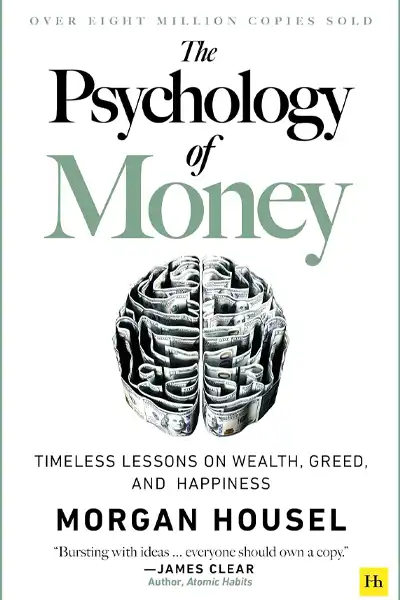
| Full Title | The Psychology of Money: Timeless Lessons on Wealth, Greed, and Happiness |
| Author Name | Morgan Housel |
| Ghostwriter | No officially credited ghostwriter |
| Genre | Personal Finance, Investing, Behavioral Finance, Self-Help, Money Management, Business & Economics |
| First Publisher | Harriman House |
| First Publication Date | 8 September 2020 |
| Formats Available | Paperback, Hardcover, eBook, Kindle Edition, Audiobook, MP3 CD |
| Number of Pages | 256 pages |
| Series | No. It is a standalone book and not part of a series. |
| Edition | Multiple editions and international editions have been published since 2020, including hardcover, paperback, digital, and translated versions. |
| Original Language | English |
| Languages Available | English and more than 50 translated languages, including Spanish, French, German, Portuguese, Italian, Chinese, Japanese, Korean, Hindi, Arabic, Turkish, Vietnamese, and Indonesian. |
| Recommended Age Group | 16+ years; suitable for young adults, college students, professionals, investors, and general readers interested in improving their financial understanding. |
| Book Dimensions | Approximately 5.5 × 0.9 × 8.5 inches (13.97 × 2.29 × 21.59 cm) |
| Approx. Copies Sold | More than 8 million copies worldwide (estimated across all editions and translations). |
| ISBN-10 | 0857197681 |
| ISBN-13 | 9780857197689 |
| Country of Origin | United Kingdom (first published by Harriman House, England) |
Read Inside This Book
Inside this book.
About the Book: The Psychology of Money – Summary
The Psychology of Money by Morgan Housel is not a traditional finance book filled with complicated formulas or technical jargon. Instead, it explores the human side of money and explains how our habits, emotions, experiences, and personal beliefs shape financial decisions. Through a collection of engaging stories and real-life examples, Housel demonstrates that managing money is often more about behavior than intelligence.
One of the book’s strongest messages is that people from different backgrounds can make completely different financial choices, and both may seem reasonable based on their life experiences. The author encourages readers to focus less on comparing themselves with others and more on building financial habits that support their own goals. Topics such as saving consistently, avoiding unnecessary risks, embracing long-term thinking, and understanding the role of luck and uncertainty are presented in a simple and relatable manner.
Rather than promising instant wealth, the book highlights the value of patience and realistic expectations. Small, repeated actions can create meaningful results over time, much like planting a seed and allowing it to grow steadily.
Conclusion
The Psychology of Money offers practical wisdom for anyone seeking a healthier relationship with money. Its timeless lessons remind readers that financial success is not solely determined by what you know, but also by how you behave. Easy to understand and deeply insightful, this book provides valuable guidance for readers at every stage of their financial journey.
Contents of this Book.
Table of Contents of The Psychology of Money
* Introduction: The Greatest Show on Earth
Chapter 1
* No One’s Crazy
Chapter 2
* Luck & Risk
Chapter 3
* Never Enough
Chapter 4
* Confounding Compounding
Chapter 5
* Getting Wealthy vs. Staying Wealthy
Chapter 6
* Tails, You Win
Chapter 7
* Freedom
Chapter 8
* Man in the Car Paradox
Chapter 9
* Wealth is What You Don’t See
Chapter 10
* Save Money
Chapter 11
* Reasonable > Rational
Chapter 12
* Surprise!
Chapter 13
* Room for Error
Chapter 14
* You’ll Change
Chapter 15
* Nothing’s Free
Chapter 16
* You & Me
Chapter 17
* The Seduction of Pessimism
Chapter 18
* When You’ll Believe Anything
Chapter 19
* All Together Now
Chapter 20
* Confessions
* Conclusion: The Psychology of Money
* A Brief History of Why Consumers Think the Way They Do
* End Notes
Chapter-wise Summary.
Chapter-wise Summary of The Psychology of Money
Introduction: The Greatest Show on Earth
Morgan Housel introduces the idea that money decisions are rarely driven by numbers alone. Personal experiences, emotions, and circumstances shape financial behavior, making every person’s approach to wealth unique and deeply human.
Chapter 1: No One’s Crazy
People make financial decisions based on their individual experiences and environments. What seems irrational to one person may make complete sense to another. Understanding this perspective encourages empathy and reduces judgment around money choices.
Chapter 2: Luck & Risk
Success and failure often involve factors beyond individual control. Housel explains that acknowledging the roles of luck and risk can promote humility, realistic expectations, and better long-term financial planning.
Chapter 3: Never Enough
The constant desire for more can lead to unnecessary risks and dissatisfaction. This chapter highlights the importance of recognizing personal limits and appreciating what is already sufficient.
Chapter 4: Confounding Compounding
Small actions repeated consistently over long periods can produce extraordinary results. Housel demonstrates how patience and persistence often matter more than dramatic financial moves.
Chapter 5: Getting Wealthy vs. Staying Wealthy
Building wealth and preserving it require different skills. Earning money may involve taking calculated risks, while maintaining wealth often depends on caution, adaptability, and disciplined habits.
Chapter 6: Tails, You Win
A few exceptional outcomes can account for the majority of success. Readers learn that consistency and resilience matter because not every effort needs to produce remarkable results.
Chapter 7: Freedom
True wealth can provide the freedom to control one’s time and decisions. Housel suggests that flexibility and independence often contribute more to happiness than material possessions.
Chapter 8: Man in the Car Paradox
People frequently admire symbols of success without considering the individual behind them. This chapter reminds readers that seeking approval through possessions rarely delivers lasting fulfillment.
Chapter 9: Wealth is What You Don’t See
Real wealth is often invisible. Savings, investments, and financial security are not always displayed outwardly, yet they form the foundation of long-term stability.
Chapter 10: Save Money
Saving does not always require a specific financial goal. Developing the habit of setting resources aside can create opportunities, reduce stress, and provide a buffer against uncertainty.
Chapter 11: Reasonable > Rational
Perfectly rational decisions may not always fit real life. Housel argues that making choices you can comfortably maintain is often more effective than pursuing theoretical perfection.
Chapter 12: Surprise!
Unexpected events are an unavoidable part of life and investing. Preparing for uncertainty can help individuals respond more effectively when circumstances change unexpectedly.
Chapter 13: Room for Error
Building flexibility into financial plans provides protection against mistakes and unforeseen challenges. A margin for error can support confidence and long-term resilience.
Chapter 14: You’ll Change
Goals, priorities, and values naturally evolve over time. Recognizing this reality allows people to make financial decisions that adapt to life’s changing circumstances.
Chapter 15: Nothing’s Free
Every worthwhile outcome involves a cost. In investing, patience, uncertainty, and market volatility often represent the price paid for long-term rewards.
Chapter 16: You & Me
Different investors operate under different conditions and objectives. Comparing financial decisions without considering individual circumstances can lead to poor judgment and unnecessary frustration.
Chapter 17: The Seduction of Pessimism
Negative predictions often attract more attention because they feel urgent and persuasive. Housel encourages readers to balance caution with an appreciation for progress and possibility.
Chapter 18: When You’ll Believe Anything
Strong emotions can influence how people interpret information. Fear and excitement sometimes make unrealistic ideas appear convincing, especially during uncertain periods.
Chapter 19: All Together Now
This chapter brings together the book’s central lessons, emphasizing that behavior, discipline, and perspective play essential roles in shaping financial outcomes.
Chapter 20: Confessions
Housel shares personal insights about his own financial philosophy. He demonstrates that practical approaches grounded in simplicity and consistency can support lasting financial well-being.
Conclusion: The Psychology of Money
The conclusion reinforces the idea that managing money is as much about behavior as knowledge. Thoughtful habits, patience, and self-awareness can significantly influence financial success.
A Brief History of Why Consumers Think the Way They Do
This section explores how historical events and social changes shape consumer attitudes. Understanding these influences provides valuable context for modern financial behavior.
End Notes
The end notes offer additional references and supporting information, encouraging readers to explore the concepts discussed throughout the book in greater depth.
Key Themes & Takeaways.
Key Themes & Takeaways of The Psychology of Money
Behavior matters more than intelligence: Financial success often depends on habits, patience, and emotional control rather than having expert-level knowledge about markets.
Everyone has a unique money story: Personal experiences shape how people view spending, saving, and investing. Understanding this can encourage better financial decisions and empathy toward others.
Compounding rewards consistency: Small, disciplined actions repeated over many years can produce meaningful results. Time is often one of the most powerful financial tools.
Saving creates flexibility: Regular saving provides security, reduces stress, and opens doors to future opportunities, even when no specific goal exists.
Enough is a powerful concept: Knowing when to stop chasing more can protect both wealth and peace of mind.
Prepare for uncertainty: Building a margin for error helps people navigate unexpected events without derailing long-term plans.
Wealth is often invisible: True financial strength frequently lies in assets, savings, and options rather than outward displays of success.
Freedom has lasting value: Money can offer the ability to control your time, make independent choices, and live according to your priorities.
Best Short Quotes from this Book.
Best Short Quotes from The Psychology of Money
1. “Doing well with money has little to do with how smart you are.”
2. “No one is crazy.”
3. “Controlling your time is the highest dividend money pays.”
4. “Wealth is what you don’t see.”
5. “Saving money is the gap between your ego and your income.”
6. “Reasonable is more realistic than rational.”
7. “Enough is realizing that an insatiable appetite will push you to the point of regret.”
8. “Compounding works best when you can give a plan years to grow.”
9. “Planning is important, but flexibility matters just as much.”
10. “The hardest financial skill is getting the goalpost to stop moving.”
11. “Luck and risk are siblings.”
12. “Money’s greatest intrinsic value is its ability to give you control over your time.”
Who Should Read this Book?
Who Should Read The Psychology of Money?
People who want a healthier relationship with money: This book is ideal for readers who wish to understand why they make certain financial choices and how emotions influence those decisions.
Beginners exploring personal finance: Those new to saving, investing, or money management will appreciate the book’s simple language and practical lessons that do not require prior financial knowledge.
Young adults building lifelong habits: Students and early-career professionals can benefit from learning how patience, consistency, and realistic expectations shape long-term financial well-being.
Investors seeking a different perspective: Readers interested in understanding the behavioral side of investing will find valuable insights that go beyond charts, predictions, and market trends.
Professionals managing financial responsibilities: Individuals balancing careers, family obligations, and future goals may discover strategies that encourage thoughtful planning and reduced financial stress.
Readers who enjoy psychology and human behavior: The book connects money decisions with everyday experiences, making it appealing even to those who are not deeply interested in finance.
Anyone who compares their financial journey with others: Housel reminds readers that every person’s circumstances are different, encouraging self-awareness rather than constant comparison.
People looking for practical wisdom rather than quick fixes: The book does not promise overnight success. Instead, it promotes sustainable habits that can support long-term confidence and financial stability.
Emotional Impact of this Book.
Emotional Impact of The Psychology of Money
How the Book Makes You Feel
The Psychology of Money leaves readers with a sense of reassurance and clarity. Instead of making money management feel intimidating, Morgan Housel presents it as a deeply human experience shaped by habits, emotions, and personal circumstances. The book often brings relief because it reminds readers that financial mistakes do not necessarily stem from a lack of intelligence. It encourages self-compassion while motivating positive change. By the end, many readers feel more confident about making thoughtful financial decisions without chasing perfection.
Memorable Moments
One of the book’s most powerful moments is the idea that “wealth is what you don’t see.” This lesson challenges the common belief that visible luxury equals financial success. Another memorable insight is the distinction between getting wealthy and staying wealthy, emphasizing that preserving financial stability requires patience, humility, and discipline. The discussion about “enough” also resonates deeply, encouraging readers to define success on their own terms rather than through endless comparison.
Relatable Experiences
Nearly everyone has experienced financial uncertainty, compared their progress with others, or worried about making the wrong money decision. Housel addresses these concerns with understanding rather than judgment. His stories reflect everyday situations, from saving for future goals to resisting social pressure to spend beyond one’s means. Readers often recognize themselves in these examples, making the lessons feel practical and personal.
Lasting Impression
The book inspires a shift in perspective. Rather than viewing money as a measure of status, readers begin to see it as a tool that can create security, flexibility, and peace of mind. Its thoughtful insights continue to influence how people think about wealth long after they finish reading.
Strengths of this book.
Strengths of The Psychology of Money
Makes complex financial ideas easy to understand: Morgan Housel explains money concepts through simple language and relatable stories, making the book accessible even to readers with little financial knowledge.
Focuses on the behavioral side of money: Rather than concentrating solely on investment strategies, the book explores how emotions, habits, and personal experiences shape financial decisions.
Offers timeless lessons: The principles discussed are not tied to specific market trends. Ideas such as patience, discipline, and long-term thinking remain relevant across generations.
Uses engaging storytelling: Real-life examples and historical anecdotes bring abstract concepts to life, helping readers connect with the lessons on a personal level.
Encourages practical financial habits: The book highlights the value of saving regularly, avoiding unnecessary risks, and maintaining realistic expectations about wealth.
Promotes a healthier definition of success: Housel reminds readers that financial well-being is not about impressing others but about creating freedom, security, and peace of mind.
Appeals to a broad audience: Whether someone is a student, professional, investor, or simply curious about money management, the book provides valuable insights that are easy to apply.
Challenges common money misconceptions: It encourages readers to rethink assumptions about wealth, luck, and decision-making, leading to more thoughtful financial choices.
Balances optimism with caution: The author acknowledges uncertainty while emphasizing the importance of preparation and resilience in the face of unexpected events.
Inspires long-term thinking: One of the book’s greatest strengths is its reminder that small, consistent actions often produce meaningful results over time.
Weaknesses or Limitations of this Book.
Weaknesses or Limitations of The Psychology of Money
Limited step-by-step financial guidance: While the book (The Psychology of Money) offers valuable insights into money behavior, it does not provide detailed instructions on budgeting, investing, or creating a specific financial plan.
Less focus on technical investing concepts: Readers seeking in-depth explanations of stock valuation, asset allocation, or portfolio construction may find the content too broad and introductory.
Some ideas are revisited multiple times: Certain themes, such as patience and long-term thinking, appear throughout the book (The Psychology of Money). Although this reinforces key messages, some readers may perceive it as repetitive.
Examples may not fit every financial situation: The stories and experiences shared are insightful, but readers from different economic backgrounds or cultures may interpret them differently.
Behavioral insights can feel subjective: Since many lessons are based on psychology and personal experiences, some readers may prefer more data-driven or research-heavy discussions.
Does not guarantee financial success: The book (The Psychology of Money) encourages healthy money habits but acknowledges that external factors such as luck, timing, and unexpected life events also influence outcomes.
Experienced investors may seek deeper analysis: Readers with advanced financial knowledge might wish for more complex case studies or detailed investment strategies.
Emphasizes mindset over execution: Understanding how to think about money is valuable, but readers may need additional resources to translate those ideas into actionable financial plans.
The essay-style structure may not appeal to everyone: Since the book (The Psychology of Money) consists of independent chapters connected by common themes, readers looking for a traditional, linear format may find the flow unconventional.
Some lessons require personal reflection: The book (The Psychology of Money) often encourages readers to examine their own beliefs and behaviors around money. This introspective approach can be rewarding, but it may feel demanding for those seeking quick answers.
FAQ Section.
FAQ About The Psychology of Money
1. Is The Psychology of Money only for people interested in investing?
No. The book is for anyone who earns, spends, saves, or worries about money. Its lessons focus on everyday financial behavior rather than advanced investment techniques.
2. What makes this book (The Psychology of Money) different from other personal finance books?
Instead of teaching complicated formulas, Morgan Housel explains how emotions, habits, and life experiences influence financial decisions. The book explores the human side of money.
3. Can beginners understand this book (The Psychology of Money) easily?
Absolutely. The writing style is simple and conversational. Real-life stories and practical examples make even complex financial ideas easy to grasp.
4. Does the book (The Psychology of Money) offer practical lessons that readers can apply immediately?
Yes. Readers can learn valuable habits such as saving consistently, thinking long term, avoiding comparison, and making decisions that align with their personal goals.
5. Why do so many readers recommend this book (The Psychology of Money)?
Many readers appreciate its relatable approach. Instead of judging financial mistakes, it helps people understand why they happen and how to develop healthier money habits.
6. Will this book (The Psychology of Money) help reduce financial anxiety?
While it cannot eliminate uncertainty, it encourages a calmer perspective by emphasizing preparation, patience, and realistic expectations rather than constant perfection.
7. Is the book (The Psychology of Money) filled with technical financial terms?
No. Morgan Housel avoids unnecessary jargon and presents his ideas through engaging stories that readers from different backgrounds can connect with.
8. What is one of the most memorable ideas in the book (The Psychology of Money)?
The concept that “wealth is what you don’t see” often leaves a lasting impression. It reminds readers that financial security matters more than outward appearances.
9. Who would benefit the most from reading this book (The Psychology of Money)?
Students, professionals, parents, entrepreneurs, and retirees can all gain useful insights because the lessons apply to various stages of life.
10. Is The Psychology of Money worth buying?
If you want a book that changes the way you think about money rather than simply telling you where to invest, this book is a worthwhile addition to your reading list.
About the author








Final Verdict :
The Psychology of Money is a thoughtful and accessible read that transforms the way people view wealth and financial success. Morgan Housel's practical insights on behavior, patience, and decision-making make this book valuable for readers at any stage of life.
- Book Rating:9.4