
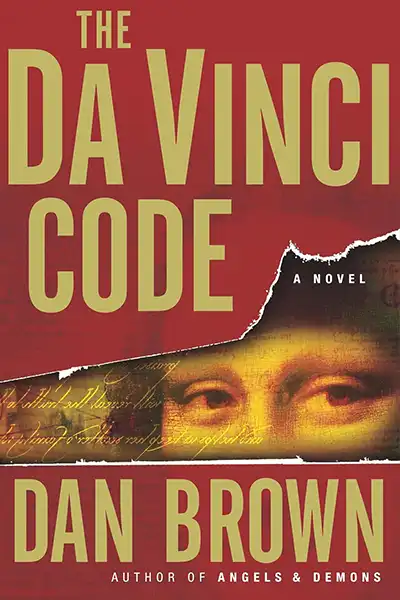
| Full Title | The Da Vinci Code |
| Author Name | Daniel Gerhard Brown, professionally known as Dan Brown |
| Ghostwriter | None credited; Dan Brown is the sole credited author |
| Genre | Mystery, thriller, detective fiction, conspiracy fiction, historical/religious fiction |
| First Publisher | Doubleday |
| First Publication Date | March 18, 2003 |
| Original Publication Country | United States |
| Formats Available | Hardcover, paperback, large print, eBook and audiobook |
| Number of Pages | 464 pages in the current U.S. Doubleday hardcover listing; some records for the first printing list 454 pages, reflecting different cataloging conventions. |
| Series | Yes. It is Robert Langdon #2, following Angels & Demons. |
| Edition | Hundreds of editions worldwide. Goodreads currently lists hundreds of edition records, including different countries, languages and formats. |
| Original Language | English |
| Languages Available | Originally written in English and translated into more than 44 languages; Brown’s official site says his novels are now published in 56 languages worldwide. |
| Recommended Age Group | Adults and mature young adult readers, generally suitable for readers around 16+, depending on individual sensitivity |
| Book Dimensions | The current U.S. hardcover is listed at approximately 6⅛ × 9¼ inches. Another current retailer listing gives approximately 6.42 × 9.54 × 1.19 inches, showing that measurements can differ slightly by printing/edition. |
| Approx. Copies Sold | More than 85 million copies worldwide, according to the current Penguin Random House listing. |
| ISBN-10 | 0385504209 |
| ISBN-13 | 9780385504201 |
| Country of Origin | United States |
Read Inside This Book
Inside this book.
About the Book: The Da Vinci Code
When I picked up The Da Vinci Code by Dan Brown, I expected a mystery, but I found a story that made me question almost every clue along the way. The book begins with a shocking murder inside the Louvre Museum in Paris. Soon, the investigation leads to hidden messages, ancient symbols, secret societies, famous artworks, and surprising connections to history.
The story follows Robert Langdon, a Harvard professor who specializes in symbols, and Sophie Neveu, a skilled French cryptologist. Together, they try to uncover the meaning behind a series of mysterious clues. What I enjoy most is how each answer creates another question. Just when I think I understand what is happening, the story takes me in a different direction.
Dan Brown also makes art, history, religion, and puzzles feel closely connected to the mystery. The short chapters and constant discoveries keep the pace moving, so I can easily imagine reading “just one more chapter” and continuing much longer than planned.
Conclusion
For me, The Da Vinci Code is a worthwhile choice for readers who enjoy mystery novels, thrillers, secret societies, historical puzzles, coded messages, and unexpected twists. I would recommend it to anyone looking for an entertaining story that keeps the mind active and the curiosity alive. If I want a book that can hold my attention while giving me plenty of mysteries to think about, this is one I would happily add to my bookshelf.
Written & Reviewed by – Debabrata Das
(Founder & Editor-in-Chief)
Contents of this Book.
Table of Contents The Da Vinci Code
- Prologue
- Chapter 1 – Chapter 105
- Epilogue
Chapter-wise Summary.
Chapter-wise Summary of The Da Vinci Code
The Da Vinci Code begins with the murder of Louvre curator Jacques Saunière, who leaves behind a strange trail of symbols and coded clues. As I follow the story, I find that this is far more than a murder mystery—it gradually becomes a race involving art, history, religion, secret societies, and hidden family secrets.
Prologue–Chapter 10
The story opens with Saunière desperately trying to protect an ancient secret before he is killed. Robert Langdon, a Harvard professor of religious symbology, is brought into the investigation and quickly becomes a suspect. Sophie Neveu, a French cryptologist, secretly helps him escape. Together, they begin decoding Saunière’s clues and discover that his death is connected to the mysterious Priory of Sion.
Chapters 11–20
Sophie and Langdon follow a series of puzzles involving numbers, symbols, Leonardo da Vinci, and famous artworks. Their investigation takes them deeper into Saunière’s hidden world. At the same time, Silas, a devoted and dangerous member of Opus Dei, continues searching for the secret. The clues reveal that the murder is connected to something far more important than money.
Chapters 21–30
The mystery expands as Langdon explains the symbolism hidden within Leonardo’s paintings and the historical significance of the Holy Grail. Sophie begins discovering that her grandfather had been protecting secrets from her. Their escape from the authorities becomes increasingly urgent, while Fache continues believing Langdon is involved in the murder.
Chapters 31–40
Langdon and Sophie uncover more information about the Priory of Sion and its alleged role in protecting an ancient secret. They eventually obtain a mysterious cryptex, a device designed to protect a hidden message. I find this part especially engaging because every answer creates another puzzle, keeping the investigation moving.
Chapters 41–50
The search leads toward the deeper history of the Holy Grail, Mary Magdalene, and the sacred feminine. Langdon explains that the Grail may not simply be a physical cup. Meanwhile, different characters pursue the same secret for very different reasons, making it increasingly difficult to know whom Sophie and Langdon can trust.
Chapters 51–60
The investigation moves beyond France as the clues point toward England. Langdon and Sophie continue protecting the cryptex while learning more about the Priory, the Knights Templar, and the historical traditions surrounding the Grail. Their discoveries also make Sophie’s own family history increasingly important to the mystery.
Chapters 61–70
After reaching England, Langdon and Sophie continue decoding Saunière’s clues. Their search brings them closer to the truth about the Grail and the people attempting to control its secret. The story also reveals how deception has been used to manipulate Silas and other characters into serving a hidden agenda.
Chapters 71–80
The mystery becomes more dangerous as Langdon and Sophie follow clues connected with Leonardo, Newton, the Grail, and the Priory. Their trust in certain allies is tested. Meanwhile, the identity of the mysterious Teacher becomes increasingly important, and the investigation begins moving toward its final confrontation.
Chapters 81–90
The search leads to the Temple Church and eventually toward the revelation of the person manipulating the events. Langdon and Sophie realize that the conspiracy is based on carefully planned deception. The cryptex becomes crucial as they attempt to protect its message while uncovering the real motive behind Saunière’s murder.
Chapters 91–100
The final clues point toward Isaac Newton and eventually reveal the Teacher’s identity. Langdon uses his knowledge of symbolism and the cryptex to outsmart Teabing, while Fache arrives to arrest him. Silas is seriously wounded, and Aringarosa finally realizes that he has been manipulated.
Chapters 101–105
The conspiracy collapses. Aringarosa survives and decides to use the money connected to the Grail differently. Langdon and Sophie travel to Rosslyn Chapel, where Sophie discovers her grandmother and brother. Marie reveals the family secret: Sophie comes from the bloodline that the Priory has protected for generations.
Epilogue
Back in Paris, Langdon follows his intuition to the Louvre and discovers the symbolic connection between the pyramids and the Grail. For me, this ending is memorable because the mystery comes full circle, returning to the place where the story began.
Why I Would Buy This Book
I would buy The Da Vinci Code because it gives me much more than a conventional thriller. I get murder, puzzles, historical mysteries, famous artwork, secret societies, religious questions, and unexpected revelations woven into one fast-moving story. Its biggest appeal is the feeling that every symbol might hide another secret—and that makes me want to keep turning the pages until I uncover the truth.
Written & Reviewed by – Debabrata Das,
(Founder & Editor-in-Chief)
Key Themes & Takeaways.
Key Themes & Takeaways of The Da Vinci Code
- Secrets and Hidden Knowledge: I like how the story turns forgotten history, symbols, and secret information into clues that constantly make me curious.
- Art as a Clue: Leonardo da Vinci’s artwork becomes more than something to admire. I find myself looking at familiar paintings differently as the mystery develops.
- Faith and History: The novel explores how religious beliefs and historical events can be interpreted in very different ways.
- Trust and Deception: I never feel completely sure whom I should trust. Characters hide information, create false impressions, and reveal unexpected motives.
- Women and the Sacred Feminine: The story examines the historical role of women in religious traditions and challenges familiar ideas.
- Puzzles and Discovery: Codes, numbers, symbols, and riddles keep the investigation moving and give me a reason to continue reading.
- A Memorable Reading Experience: I would buy this book for its unusual combination of mystery, art, history, religion, and suspense. It makes ordinary paintings and symbols feel like pieces of a much bigger puzzle.
Written & Reviewed by – Debabrata Das,
(Founder & Editor-in-Chief)
Strengths of this book.
Strengths of The Da Vinci Code
- A Mystery That Keeps Me Curious: I like how Dan Brown introduces one question after another. Just when I think I understand a clue, the story gives me another reason to keep investigating.
- Strong Use of Art and Symbols: One of the book’s biggest strengths is the way paintings, symbols, numbers, and historical references become important parts of the mystery. It makes familiar works of art feel much more intriguing.
- Fast-Moving Story: The short chapters and frequent discoveries keep the story moving. I rarely feel that the investigation is standing still because something new usually happens before the story slows down.
- Interesting Main Characters: Robert Langdon and Sophie Neveu make the investigation more engaging. Their different knowledge and abilities give the story a useful balance between academic research and practical problem-solving.
- Mix of Different Subjects: I especially enjoy the combination of mystery, art, history, religion, codes, and secret societies. The story does not depend on just one idea, which gives it a distinctive character.
- Constant Questions and Suspicion: I am never completely comfortable deciding whom to trust. Hidden information and unexpected revelations encourage me to look at each character’s actions more carefully.
- Historical Ideas Used Creatively: Dan Brown takes historical and religious subjects and places them inside a fictional mystery. That approach makes the story interesting even when I am simply curious about the ideas behind the plot.
- A Strong Reason to Buy: For me, the main attraction is the reading experience. If I enjoy mysteries that combine intellectual puzzles with suspense and unexpected discoveries, The Da Vinci Code offers plenty to explore. I would recommend buying it when I want a novel that keeps my attention while also giving me something to think about.
Written & Reviewed by – Debabrata Das,
(Founder & Editor-in-Chief)
Weaknesses or Limitations of this Book.
Weaknesses or Limitations of The Da Vinci Code
- Some Historical Ideas May Feel Debatable: I found that the novel presents certain historical and religious ideas in a dramatic way. Readers should remember that this is fiction, so some claims are better viewed as part of the story rather than established historical fact.
- The Plot Can Become Complicated: The book brings together many clues, symbols, organizations, historical references, and revelations. I enjoyed this complexity, but readers who prefer straightforward mysteries may sometimes find it difficult to follow.
- A Few Explanations Feel Lengthy: Some sections spend considerable time explaining symbols, history, or theories. These details add depth to the mystery, but they can slow the pace when I am more interested in seeing what happens next.
- Characters Can Feel Less Developed Than the Mystery: The central investigation receives most of the attention. Because of that, I sometimes find the characters’ personal development less detailed than the puzzles and discoveries surrounding them.
- Religious Themes May Not Suit Every Reader: The story explores sensitive questions about Christianity, faith, and religious history. I think this makes the novel more thought-provoking, but readers who prefer fiction without controversial religious subjects may not connect with it.
- Some Twists Require Suspending Disbelief: A few developments are highly dramatic and depend on accepting unlikely circumstances. I see these moments as part of Dan Brown’s fictional storytelling rather than something that needs to feel completely realistic.
- The Ending May Divide Readers: After so many clues and revelations, some readers may find that the final answers do not match the expectations they built throughout the novel. For me, the journey of uncovering the mystery remains more important than expecting every reveal to satisfy everyone.
My Overall View
For me, these limitations do not take away the main appeal of The Da Vinci Code. They simply show that the novel works best when I approach it as a fictional mystery built around art, history, religion, secret societies, and codes, rather than as a factual history book. If I enjoy questioning clues, exploring unusual theories, and following a complicated investigation, I still think this is a book worth buying and experiencing for myself.
Written & Reviewed by – Debabrata Das,
(Founder & Editor-in-Chief)
Emotional Impact of this Book.
Emotional Impact of The Da Vinci Code
• How the Book Makes Me Feel
When I read The Da Vinci Code, I feel a strong sense of curiosity because the story constantly makes me question what I think I know. The combination of mysterious clues, ancient symbols, artwork, and hidden information creates a feeling that there is always another secret waiting to be uncovered.
At times, I also feel suspicious and uncertain. Characters reveal information gradually, so I often find myself wondering who is telling the truth and who is hiding something. That uncertainty keeps me emotionally involved in the investigation.
• Memorable Moments
The opening murder at the Louvre immediately creates a dark and mysterious atmosphere for me. As Robert Langdon and Sophie Neveu begin connecting the clues, the story becomes increasingly intriguing.
I particularly remember the moments when ordinary paintings, symbols, and historical references suddenly take on a different meaning. Those discoveries make me pause and think about how easily something familiar can look completely different when I know the story behind it.
• Relatable Experiences
I can relate to the feeling of becoming obsessed with a puzzle when I know there must be an answer somewhere. The book captures that experience well. One clue leads to another, and I naturally want to solve the mystery before the characters do.
I also relate to the uncertainty of deciding whom to trust. In everyday life, we sometimes make judgments based on incomplete information. The Da Vinci Code takes that familiar feeling and places it inside a much larger mystery.
• Why I Would Recommend Buying It
For me, the emotional appeal of The Da Vinci Code comes from its ability to make me curious, suspicious, surprised, and thoughtful at the same time. I would recommend buying it if I enjoy mystery novels that involve more than a simple crime investigation. The combination of art, history, secret societies, religious questions, and hidden clues gives the story plenty to explore. Even after I finish a chapter, I can find myself thinking about the clues and wondering what they might mean.
Written & Reviewed by – Debabrata Das,
(Founder & Editor-in-Chief)
Who Should Read this Book?
Who Should Read The Da Vinci Code
- Readers Who Enjoy Mystery: I would recommend The Da Vinci Code to anyone who enjoys following clues and trying to solve a mystery alongside the characters. The story keeps introducing questions that make me want to discover what comes next.
- Fans of Historical Fiction: If I enjoy stories that connect fictional events with historical ideas, this book can be a good choice. Dan Brown uses historical references as part of the mystery, giving the investigation an unusual direction.
- People Fascinated by Art and Symbols: I think readers who enjoy paintings, hidden meanings, numbers, symbols, and visual clues will find something special here. The story encourages me to look at familiar works of art from a different perspective.
- Readers Who Like Secret Societies: The novel explores secret groups, hidden traditions, and information kept away from the public. If these subjects naturally make me curious, I am likely to enjoy the mystery surrounding them.
- Fans of Suspense and Unexpected Revelations: I would pick this book (The Da Vinci Code) when I want a story where new information can change my understanding of what happened. The investigation keeps creating uncertainty, which makes the reading experience more engaging.
- Readers Interested in Religious and Historical Questions: The book(The Da Vinci Code) raises questions about faith, history, and the way people interpret the past. I would recommend it to readers who are comfortable exploring controversial ideas through fiction.
- Readers Who Enjoy Puzzle-Based Stories: Codes, clues, numbers, and hidden connections play an important role. If I enjoy solving puzzles or noticing small details, I can have more fun following the investigation.
Who Should Buy This Book (The Da Vinci Code)?
For me, The Da Vinci Code is best suited to readers who want mystery with an intellectual side. It is not simply about discovering who committed a crime; it also invites me to think about art, history, symbols, belief, and hidden information. I would buy it if I enjoy stories that give me something to investigate while I read.
If I am looking for a mystery novel that can keep me questioning clues and reconsidering what I think I understand, The Da Vinci Code is a strong choice. Its blend of suspense, historical ideas, artwork, secret societies, and puzzles gives me several reasons to keep reading.
Written & Reviewed by – Debabrata Das,
(Founder & Editor-in-Chief)
Best Short Quotes from this Book.
Short Quote-Style Lines Inspired by The Da Vinci Code
• “Every symbol can hide a story.”
• “Truth becomes complicated when history is rewritten.”
• “The right question can be more powerful than the answer.”
• “What looks ordinary may carry a hidden meaning.”
• “Secrets survive when people stop asking questions.”
• “Knowledge can reveal what fear tries to conceal.”
• “A clue means little until you understand where to look.”
• “History remembers events, but people decide how to interpret them.”
• “Trust becomes difficult when everyone has something to hide.”
• “Sometimes the greatest mystery is the truth we refuse to see.”
• “Art can speak when words remain silent.”
• “Behind every hidden message lies a reason for keeping it hidden.”
• “Curiosity begins where certainty ends.”
• “The past can change the way we understand the present.”
• “Finding the truth is only the beginning of understanding it.”
FAQ Section.
Frequently Asked Questions About The Da Vinci Code
1. What is The Da Vinci Code about?
The Da Vinci Code is a mystery thriller about a murder at the Louvre in Paris. The investigation leads to hidden clues, secret societies, religious mysteries, historical secrets, and a much larger mystery surrounding Robert Langdon and Sophie Neveu.
2. Is The Da Vinci Code worth buying?
Yes, especially for readers who enjoy mysteries that combine suspense with puzzles, codes, history, art, and unexpected revelations. The book offers plenty of questions to keep readers curious as the investigation develops.
3. Is The Da Vinci Code a mystery or a thriller?
It fits both categories. It has the clues and investigation of a mystery, while its fast-moving plot, danger, secrets, and revelations give it the tension of a thriller.
4. Do I need to know about art or history to understand the book?
No. The book introduces the important information as part of the investigation. Previous knowledge of art, history, or religious symbolism is not necessary to follow the main plot.
5. Is The Da Vinci Code difficult to read?
No. The language is generally accessible, and the short chapters help maintain a steady pace. The frequent discoveries also make it easy to continue reading when one wants to find out what happens next.
6. Does The Da Vinci Code have a lot of suspense?
Yes. The suspense comes from hidden information, coded clues, dangerous situations, and questions about whom to trust. Several discoveries add new layers to the mystery instead of simply solving it step by step.
7. Is The Da Vinci Code suitable for first-time Dan Brown readers?
Yes. No previous knowledge of Dan Brown’s books is required. Robert Langdon’s character and the central investigation are introduced within the novel, making it accessible to new readers.
8. Is The Da Vinci Code based on real history?
The novel uses real artworks, historical references, locations, and religious ideas, but it is a work of fiction. Some interpretations and connections presented in the story should therefore be read as part of the fictional narrative rather than as established historical fact.
9. Will The Da Vinci Code keep me guessing?
Yes. Clues often lead to further questions, and information revealed later can change the way earlier events are understood. Readers who enjoy forming theories while reading may find this especially entertaining.
10. Why should I buy The Da Vinci Code?
It brings together murder, codes, art, history, secret societies, and suspense in one fast-moving mystery. The strongest reason to buy it is the puzzle-like reading experience: each clue creates another question, making it tempting to keep turning the pages until the hidden connections finally become clear.
About the author

Final Verdict :
Overall, readers will appreciate The Da Vinci Code for its suspense, intriguing ideas, and ability to keep curiosity alive. It is a rewarding pick for mystery and thriller fans who want something memorable on their bookshelf. If that sounds like your kind of reading, it is worth buying.
- Book Rating:9.2