
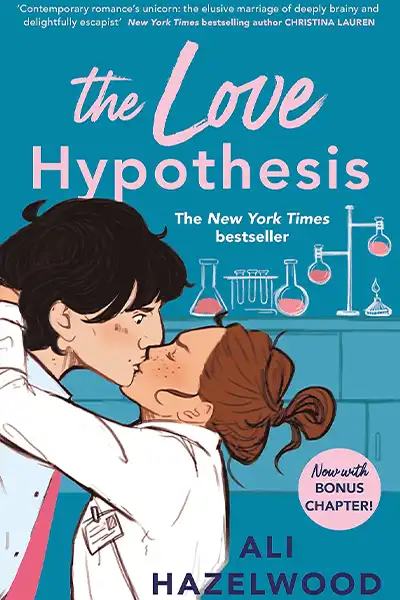
| Full Title | The Love Hypothesis |
| Author Name | Ali Hazelwood |
| Ghostwriter | None credited. Ali Hazelwood is the credited author. |
| Genre | Fiction – Contemporary Romance, with elements of romantic comedy and workplace romance. |
| First Publisher | Jove, New York, United States. The Library of Congress record identifies the first edition as a Jove book. |
| First Publication Date | September 14, 2021 |
| Original Publication Country | United States |
| Formats Available | Paperback, hardcover, eBook/Kindle, and audiobook. Library records also list eBook and eAudiobook editions. |
| Number of Pages | 373 pages for the original U.S. first-edition paperback. Some editions list 376, 383, or 400 pages, so the number depends on the edition. |
| Series | Standalone novel, although it is often grouped with Ali Hazelwood’s interconnected STEM-themed romance novels. It does not require reading another book first. |
| Edition | Currently records 115 editions for the work, although this number changes as new editions and translations are added. |
| Original Language | Originally written in English. |
| Languages Available | Translated editions are available in numerous languages, including Spanish, Portuguese, German, Italian, French, Dutch, Polish, Czech, Slovak, Romanian, Estonian, Norwegian, Slovenian, Chinese and others. |
| Recommended Age Group | Adults and mature readers, particularly readers interested in contemporary romance. The book contains sexual situations and adult themes. |
| Book Dimensions | Dimensions vary by edition. The original U.S. paperback is approximately 5.5 × 8.25 inches (14 × 21 cm); always check the specific edition before listing exact dimensions. |
| Approx. Copies Sold | A reliable publisher announcement reported more than 750,000 copies sold worldwide in Little, Brown/Sphere editions by 2022. This should be treated as a documented historical figure rather than a current lifetime total. |
| ISBN-10 | 0593336828 |
| ISBN-13 | 9780593336823 |
| Country of Origin | United States |
Read Inside This Book
Inside this book.
Inside The Love Hypothesis
The Love Hypothesis by Ali Hazelwood is a contemporary romance that combines academic life, scientific ambition, and an unusual fake-dating arrangement. At the center of the story is Olive Smith, a graduate student whose practical decision to convince her best friend that she has moved on unexpectedly draws her into a fake relationship with Adam Carlsen, a respected and intimidating professor.
What I find interesting about this book (The Love Hypothesis) is the contrast between its intelligent academic setting and its warm, emotional love story. Olive and Adam do not simply fall in love overnight. Their relationship develops through awkward moments, misunderstandings, personal fears, and growing trust. The story also explores the pressure of academic careers, especially the uncertainty and competition that young researchers can face while trying to build their future.
If you enjoy romance with humor, strong chemistry, and characters who have their own ambitions beyond the relationship, this book (The Love Hypothesis) offers an entertaining mix. The science-based setting gives the story a different atmosphere from a typical contemporary romance, while the fake-dating premise keeps the relationship moving in unexpected directions.
Conclusion
In my view, The Love Hypothesis is worth buying for readers who want a romance that feels both playful and emotionally engaging. Its combination of fake dating, academic life, and gradually developing chemistry gives the story a memorable identity. If you enjoy following two imperfect people as an arrangement slowly becomes something more meaningful, this book can be an enjoyable addition to your reading list.
Written & Reviewed by – Debabrata Das
(Founder & Editor-in-Chief)
Contents of this Book.
Table of Contents – The Love Hypothesis
- Prologue
- Chapter One – Chapter Twenty-Two
- Epilogue
- Author’s Note
- Acknowledgments
- Excerpt from Love on the Brain
- About the Author
Chapter-wise Summary.
Chapter-Wise Summary of The Love Hypothesis
Prologue
Three years before the main story, Olive Smith visits Stanford for her PhD interview and accidentally meets a mysterious man while struggling with her contact lenses. She tells him about her scientific ambitions and her interest in cancer research. The brief conversation leaves an impression on her, although she never learns his identity.
Chapter One
Olive is now a biology PhD student at Stanford. To convince her best friend Anh that she is happily dating someone, Olive impulsively kisses a stranger. Unfortunately, the man is Dr. Adam Carlsen, a feared and highly respected professor. The embarrassing encounter becomes the beginning of an unexpected connection.
Chapter Two
Olive continues dealing with the embarrassment of kissing Adam while focusing on her pancreatic cancer research. She also learns about a possible opportunity at Harvard. When Anh sees Adam again, circumstances make their fake relationship seem believable, creating a situation neither Olive nor Adam initially planned.
Chapter Three
Adam and Olive agree to continue pretending to date because their arrangement could benefit both of them. Olive wants Anh to feel comfortable pursuing Jeremy, while Adam needs to reassure Stanford that he plans to remain there. Their fake relationship begins with clear rules, but attraction slowly complicates those boundaries.
Chapter Four
Olive meets Adam for their first planned fake date and discovers that spending time with him is surprisingly enjoyable. They talk about their backgrounds, careers, and personal habits. Although Adam remains serious and difficult to read, Olive begins noticing qualities beneath his intimidating reputation that make him increasingly interesting.
Chapter Five
As their pretend relationship becomes more convincing, Olive starts spending more time around Adam. His actions do not always match his reputation, and she notices his considerate side. Meanwhile, Olive remains focused on her research and her complicated feelings, trying to remind herself that their relationship is only an arrangement.
Chapter Six
Olive and Adam continue their carefully planned public appearances while trying to avoid attracting unnecessary attention. Their conversations become more personal, and Olive begins to understand him better. The more time they spend together, the harder it becomes for her to separate genuine attraction from the boundaries of their fake relationship.
Chapter Seven
A conflict involving Adam and another graduate student makes Olive question his harsh approach to academic work. Later, she sees Adam in a completely different setting at a department picnic and becomes intensely aware of her attraction to him. Their playful interaction makes her increasingly uncertain about their arrangement.
Chapter Eight
Olive works late and unexpectedly spends time with Adam in the laboratory. Their conversation becomes relaxed and personal, revealing more about their lives. At the conference, Olive’s professional success is overshadowed by an uncomfortable encounter with Tom Benton. Adam later notices that something is wrong and tries to comfort her.
Chapter Nine
Olive and Adam continue navigating their growing attraction while preparing for the conference. Olive’s research remains central to her goals, but her relationship with Adam increasingly affects her emotions. She begins to wonder whether their agreement is protecting her from complications or simply delaying something that both of them can already feel.
Chapter Ten
The relationship becomes harder for Olive to treat as purely fictional. Adam’s support gives her confidence, while his reserved personality continues to hide what he really thinks. Their interactions mix humour with genuine emotional moments, and Olive starts questioning whether she can continue pretending that her feelings have nothing to do with him.
Chapter Eleven
Olive’s professional responsibilities and her personal situation begin colliding. Her research opportunity at Harvard becomes more important, while Adam’s presence makes her emotional choices more difficult. She continues telling herself that their relationship has an expiration date, even though their growing closeness suggests that ending the arrangement may hurt more than expected.
Chapter Twelve
Olive and Adam become increasingly comfortable together. Small conversations reveal personal details that they would normally keep private, and their chemistry becomes difficult to ignore. Olive still struggles with insecurity, particularly about her academic abilities, while Adam quietly shows that he sees more potential in her than she sees in herself.
Chapter Thirteen
As the conference approaches, Olive becomes more aware of the complicated situation surrounding her research and future. Adam remains supportive, but his own career decisions create uncertainty. Their relationship continues developing through moments of humour, tension, and honesty, making Olive question whether she is falling for someone she was never supposed to love.
Chapter Fourteen
At the conference, Olive faces an upsetting situation involving Tom that damages her confidence and makes her question her professional future. She hides the full truth from Adam because she feels embarrassed and uncertain about what to do. Adam notices her distress and responds with patience rather than pressuring her to explain everything.
Chapter Fifteen
Adam takes Olive away from the stressful conference environment and spends time with her privately. During dinner and later conversation, he opens up about painful experiences from his own academic past. His honesty helps Olive understand why he behaves so seriously, while their growing emotional closeness makes their relationship feel increasingly real.
Chapter Sixteen
Olive and Adam finally stop pretending that their attraction is only part of the arrangement. Their relationship becomes intimate, and Olive feels safe enough to acknowledge how deeply she trusts him. The moment changes their connection because it brings both emotional vulnerability and physical attraction into a relationship that was supposed to remain temporary.
Chapter Seventeen
After becoming intimate, Olive and Adam share more personal stories about their childhoods, families, and fears. Olive learns that Adam has his own history of difficult academic experiences. She also discovers that he may be considering a position at Harvard, leaving her worried that the person she has grown attached to could soon leave.
Chapter Eighteen
Olive struggles with the possibility of Adam moving away while also dealing with uncertainty about her own career. Their relationship has become much more meaningful than she expected, but she remains afraid of what might happen when their original agreement ends. Her emotions become difficult to separate from her professional decisions.
Chapter Nineteen
Olive tries to make sense of everything that has happened, including her feelings for Adam and the problems surrounding Tom. She begins questioning whether she has misunderstood Adam’s intentions and whether their relationship can survive outside the boundaries of their original agreement. Her fear of losing him becomes increasingly difficult to ignore.
Chapter Twenty
Olive finally decides that hiding the truth is no longer acceptable. She confronts Adam and reveals what happened with Tom, including evidence that supports her account. Adam reacts with anger but focuses on protecting Olive rather than allowing his emotions to control him. The truth forces serious consequences for Tom and changes Olive’s future.
Chapter Twenty-One
Back in California, Olive receives several promising responses about her research and begins seeing new possibilities for her academic career. Adam returns with Holden, and the group meets for dinner. During their conversation, Olive discovers that Adam’s feelings for her began much earlier than she realized, changing how she understands their entire relationship.
Chapter Twenty-Two
Olive and Adam finally talk openly about their past and their feelings. She realizes that the mysterious man she met three years earlier was Adam, and he had remembered her. With the misunderstandings finally cleared away, Olive admits that she loves him, allowing their relationship to move beyond the rules of their original fake-dating arrangement.
Epilogue
Ten months later, Olive and Adam are still together and celebrating the anniversary of their first kiss. They return to the laboratory and recreate that memorable moment. What began as an impulsive act to help a friend has developed into a genuine relationship, while Olive’s professional future also continues to move forward.
Key Themes & Takeaways.
Key Themes & Takeaways of The Love Hypothesis
- Fake Love Can Reveal Real Feelings – Olive and Adam begin with a pretend relationship, but spending time together gradually makes their emotions impossible to ignore.
- Love Cannot Always Be Calculated – Olive approaches life like a scientist, yet her feelings for Adam show her that emotions do not always follow logic.
- Women in STEM – The story highlights Olive’s determination to build a career in science while dealing with pressure, self-doubt, and unfair treatment.
- Self-Worth Matters – Olive learns that other people’s opinions do not decide her value or the quality of her work.
- Career and Personal Life – The book (The Love Hypothesis) shows how easy it is to become so focused on work that relationships and personal happiness get pushed aside.
- Trust and Vulnerability – As Olive and Adam become more honest with each other, their relationship develops beyond the original arrangement.
- My Takeaway – I found the book (The Love Hypothesis) appealing because it combines workplace tension, scientific ambition, humor, and romance without making the story feel like romance alone. If you enjoy smart characters, emotional growth, and a slow shift from pretend dating to genuine connection, The Love Hypothesis is a book I would recommend adding to your reading list.
Written & Reviewed by – Debabrata Das,
(Founder & Editor-in-Chief)
Strengths of this book.
Strengths of The Love Hypothesis
- Engaging Fake-Dating Story – The pretend relationship between Olive and Adam creates amusing situations, unexpected tension, and enough emotional uncertainty to keep me turning the pages.
- Strong Character Chemistry – Their conversations, awkward moments, and gradual attraction make the romance feel lively rather than rushed.
- A Fresh Academic Setting – The university and laboratory background gives the story a distinctive identity. Science, research, and academic pressure become natural parts of the plot.
- Well-Defined Main Characters – Olive’s warmth and determination balance Adam’s serious, reserved personality. Their differences create both humor and emotional depth.
- Humor and Natural Dialogue – Olive’s thoughts and the exchanges between the characters add energy to the story, even during more serious moments.
- Women in STEM Representation – The book (The Love Hypothesis) gives attention to Olive’s scientific ambitions and the difficulties women may face in male-dominated academic spaces.
- Emotional Development – The relationship grows through trust, honesty, and vulnerability instead of depending only on attraction.
- Easy, Entertaining Reading – I found the writing accessible and the pacing suitable for readers who want a romantic story that combines humor, career struggles, and heartfelt moments.
- A Compelling Reading Choice – I would recommend this book (The Love Hypothesis) to readers who enjoy workplace romance, grumpy-and-sunshine characters, fake dating, and stories where professional ambition matters alongside love.
Written & Reviewed by – Debabrata Das,
(Founder & Editor-in-Chief)
Weaknesses or Limitations of this Book.
Weaknesses or Limitations of The Love Hypothesis
- The Fake-Dating Setup May Feel Unconvincing – The story begins with an unusual reason for Olive and Adam to pretend to be a couple. Some readers may find the situation entertaining, while others may feel that the plot depends too much on a convenient setup.
- Some Plot Developments Are Predictable – If you regularly read contemporary romance, you may recognize several familiar turns before they happen. The fake-dating-to-romance journey follows a structure many romance readers already know.
- Communication Creates Unnecessary Tension – Olive sometimes keeps important thoughts and feelings to herself. This creates romantic suspense, but readers who prefer direct conversations may find some misunderstandings frustrating.
- The Pacing Is Not Always Even – The relationship develops gradually, while some later events move much faster. The final portion, in particular, can feel more rushed than the earlier parts of the story.
- Supporting Characters Could Have More Depth – Anh, Malcolm, and several other characters contribute to the story, but some readers may want more attention given to their individual lives and motivations.
- The Serious Conflict Changes the Tone – The workplace harassment storyline introduces a much heavier issue into an otherwise playful romance. Some reviewers felt that the situation and its aftermath deserved more detailed treatment.
- Adam’s Character May Feel Too Idealized – Once his softer side becomes clearer, Adam can sometimes seem almost too perfectly supportive. Readers looking for highly realistic romantic characters may find this less convincing.
- The Romance May Not Work for Everyone – The strong physical attraction, grumpy-and-sunshine dynamic, and romantic banter are central to the book. Readers who prefer quieter or more realistic romance may connect with the story less strongly.
- My View as a Reader – Despite these limitations, I think the book (The Love Hypothesis) has enough personality to make it worth considering, especially if you enjoy academic romance, fake dating, witty conversations, and strong romantic tension. I would not recommend buying it simply because it is popular; I would choose it if these particular elements match your reading taste.
Written & Reviewed by – Debabrata Das,
(Founder & Editor-in-Chief)
Emotional Impact of this Book.
Emotional Impact of The Love Hypothesis
- How the Book Makes Me Feel – I found The Love Hypothesis easy to connect with because Olive does not always understand her own feelings. Her doubts, awkward decisions, and fear of getting hurt make her feel more like a real person than a perfect romantic heroine. The slow change between Olive and Adam also creates anticipation without rushing their relationship.
- Memorable Moments – For me, the most memorable parts are the moments when the fake relationship begins to feel genuine. Their conversations, uncomfortable situations, growing attraction, and Adam’s quieter acts of support gradually change the way Olive sees him. The contrast between what they pretend to feel and what they actually feel keeps the emotional tension alive.
- Relatable Experiences – I especially connected with the way Olive struggles with self-doubt while trying to prove herself in academia. Many readers can relate to questioning their abilities, hiding their feelings, or worrying that being honest might complicate an important relationship. Her experience makes the romance feel connected to everyday emotional struggles rather than existing separately from real life.
- Why I Think It Is Worth Reading – I would recommend this book (The Love Hypothesis) to readers who want romance with humour, emotional uncertainty, career ambitions, and a gradual relationship. It is not only about two people falling in love; it also shows how difficult it can be to recognize what we truly want. If you enjoy fake-dating romance with an academic setting and plenty of emotional tension, The Love Hypothesis can be an enjoyable addition to your reading list.
Written & Reviewed by – Debabrata Das,
(Founder & Editor-in-Chief)
Who Should Read this Book?
Who Should Read The Love Hypothesis
I would recommend The Love Hypothesis to readers who want a romance that feels entertaining but also has a strong academic and career-focused setting. In my view, these readers are most likely to enjoy it:
- Readers who enjoy fake-dating romance – If you like stories where a pretend relationship slowly becomes something genuine, Olive and Adam’s journey offers plenty of romantic tension and unexpected moments.
- Fans of workplace and academic romance – The story takes place around university life, laboratories, research, and academic ambitions. This gives the romance a setting that feels different from a typical office love story.
- Readers interested in women in STEM – Olive is serious about her scientific career, and her professional struggles are an important part of the story. I liked that her ambitions remain part of her identity rather than disappearing once the romance develops.
- Readers who enjoy witty conversations – Olive and Adam have very different personalities, which creates awkward, funny, and sometimes surprisingly sweet interactions.
- Those who prefer slow-building relationships – Their feelings do not become completely clear overnight. The gradual change from pretending to date to understanding what they actually feel gives the romance its main emotional pull.
- Readers looking for an adult romance – The book (The Love Hypothesis) contains mature romantic and sexual content, so it is better suited to adult readers.
- My recommendation – If you enjoy romance mixed with science, humour, career ambitions, fake dating, and strong chemistry between the main characters, I think The Love Hypothesis is worth considering. I would especially pick it when I want something romantic and entertaining without leaving the characters’ professional lives behind.
Written & Reviewed by – Debabrata Das,
(Founder & Editor-in-Chief)
Best Short Quotes from this Book.
Best Short Quotes from The Love Hypothesis
* “You can fall in love: someone will catch you.”
* “Expiration dates are for the weak.”
* “I wish you could see yourself the way I see you.”
* “You are really extraordinary.”
* “False Negatives are bad, too.”
* “Her heart may be broken, but her brain was doing just fine.”
* “I’ve never been surer of anything. Except maybe cell theory.”
* “More material for my Title IX complaint.”
* “A heart will break even more easily than the weakest of hydrogen bonds.”
* “I think that somewhere along the way I forgot that I was something.”
* “It will be fine, Olive.”
* “Carry yourself with the confidence of a mediocre white man.”
FAQ Section.
Frequently Asked Questions About The Love Hypothesis
1. What is The Love Hypothesis about?
The Love Hypothesis follows Olive Smith, a Ph.D. candidate who unexpectedly enters a fake relationship with Adam Carlsen, a demanding Stanford professor. What begins as a convenient arrangement becomes increasingly complicated when genuine feelings enter the picture.
2. Is The Love Hypothesis a good book for romance readers?
Yes, especially for readers who enjoy contemporary romance with fake dating, slow-building attraction, humour, and strong chemistry between the main characters. The academic setting also gives the romance a different backdrop.
3. Is The Love Hypothesis a fake-dating romance?
Yes. Fake dating is one of the central elements of the story. Olive and Adam agree to pretend they are together, but maintaining that arrangement becomes increasingly difficult as their relationship develops.
4. Who are the main characters in The Love Hypothesis?
The story mainly follows Olive Smith and Adam Carlsen. Olive is a biology Ph.D. candidate, while Adam is a Stanford professor. Their contrasting personalities create much of the humour and romantic tension in the story.
5. Does the book (The Love Hypothesis) have a strong STEM or science setting?
Yes. Science and academic research are closely connected to Olive’s life, and the university setting plays an important role in the story. Readers who enjoy romance with a STEM background may find this aspect particularly appealing.
6. Is The Love Hypothesis funny as well as romantic?
Yes. The story combines romantic situations with awkward encounters, witty conversations, and humorous moments. This balance keeps the book from becoming a romance focused only on serious emotional scenes.
7. Is The Love Hypothesis suitable for teenagers?
The book is generally aimed at adult romance readers and contains mature romantic and sexual content. Readers looking for a young-adult romance should therefore check the content and age suitability before purchasing.
8. Does The Love Hypothesis have a happy ending?
Without giving away the ending, the story does provide romantic resolution. If you prefer romance novels that bring the central relationship to a satisfying conclusion, this is an important part of the book’s appeal.
9. Is The Love Hypothesis worth buying?
If you enjoy fake-dating romance, academic settings, witty dialogue, strong romantic tension, and characters balancing love with career ambitions, the book offers several elements that may make it worth adding to your collection. It is particularly suited to readers who like romance with a STEM-focused setting.
10. What makes The Love Hypothesis different from a typical romance novel?
The combination of romance, university research, scientific ambition, and the fake-dating setup gives the story its particular character. Instead of placing the relationship completely outside the characters’ careers, Ali Hazelwood makes their academic world an important part of the story.
About the author







Final Verdict :
The Love Hypothesis blends clever humour, academic ambition, fake-dating tension, and genuine romantic chemistry into an entertaining read. Ali Hazelwood keeps the story engaging with memorable characters and emotional moments. If you enjoy smart contemporary romance with a STEM setting, this book deserves a place on your reading list.
- Book Rating:9